

Why Full-Service Interior Design in NYC Is the Natural Choice for Homeowners Who Value Their Time Above All Else
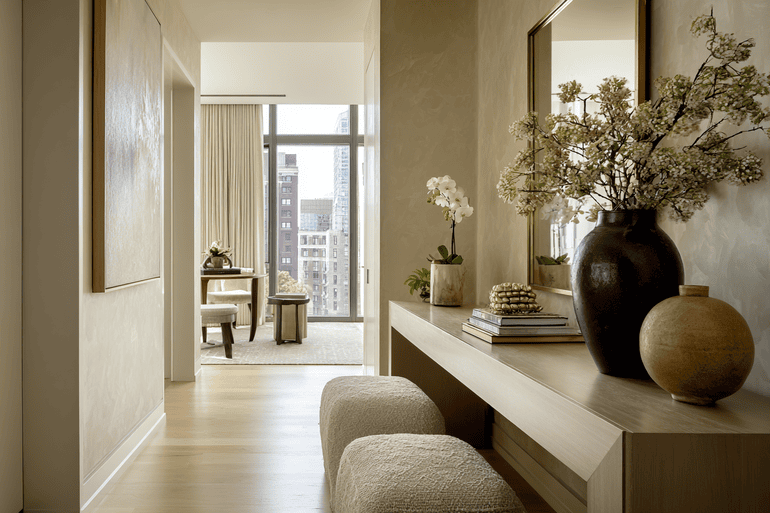
A high-end renovation in New York City is one of the most complex undertakings a homeowner can take on. For those who value their time, a full-service interior designer is not a luxury. It is simply the most practical way to get it done right.
What "Full-Service Interior Design" Actually Means
Full-service interior design means a single firm handles everything, from concept to construction to the final furniture placement, without the homeowner managing the process.
Here is what that typically includes:
- Initial design concept and space planning
- Sourcing furniture, lighting, fabrics, and finishes
- Vendor and contractor coordination
- Permit navigation and construction oversight
- Procurement, delivery scheduling, and installation
- Final styling and project sign-off
In New York City, this matters more than in most places. Buildings have co-op boards with strict renovation rules. Buildings have specific work-hour windows. Lead times on custom pieces can stretch to 20 weeks. A full-service interior designer in NYC navigates all of this on your behalf, so you do not have to.

The Real Cost of Your Time
Time is the resource most high-income New Yorkers are least willing to spend on logistics. A renovation touches dozens of moving parts, and coordinating those parts is a full-time job in itself.
Consider what managing a renovation actually involves:
- Comparing bids from multiple contractors
- Reviewing building board applications
- Following up on delayed shipments
- Being on-site to make real-time decisions
- Handling disputes between trades
What most people do not realize is that even a mid-sized NYC renovation can require hundreds of hours of coordination over the course of a year. For someone running a business, leading a team, or simply protecting their personal time, that cost is significant.
A full-service interior designer absorbs all of that. The client sees progress updates and makes design decisions. The rest runs behind the scenes.
Why NYC Renovations Are a Different Category of Complexity
High-end residential renovation in New York City operates under conditions that do not exist in most other markets.
A few realities specific to NYC projects:
- Building restrictions. Co-ops and condos each have their own alteration agreements, often requiring architect-stamped drawings, insurance certificates, and board approval before a single wall is touched.
- Landmark and historic district rules. Many Upper East Side, West Village, and Tribeca buildings are subject to Landmarks Preservation Commission oversight, which affects what can be changed on exteriors and in some interiors.
- Logistics in dense buildings. Freight elevators have limited windows. Material deliveries require advance scheduling. Some buildings charge daily fees for construction use of common areas.
- Trade access. The best contractors in NYC are booked months in advance. An established full-service interior design firm already has those relationships in place.
In New York City, most high-end renovations are led by full-service interior design firms precisely because of this level of coordination. It is not just a preference. It reflects how the work actually gets done at a high standard.

What a Full-Service Designer Actually Does (That You Would Otherwise Handle)
The design work is visible. The coordination work is not. And the coordination work is where projects go wrong.
Here is where things usually go wrong without full-service oversight:
- A contractor finishes framing before the electrical rough-in is scheduled, causing a week of downtime
- A sofa arrives before the flooring is complete and gets damaged in storage
- A building board application gets rejected because of a missing document, delaying the project start by 60 days
- A custom tile is backordered and nobody notices until installation week
A high-end interior designer in NYC anticipates these issues before they become problems. They carry the project schedule, manage the vendor relationships, and make the daily calls that keep everything aligned.
The client's experience is one of calm progress, not logistical chaos.
The Design Benefit Is Real Too
It is easy to frame full-service interior design purely as project management. But the design quality itself improves dramatically when a single firm holds the full picture.
When furniture selection, architectural detailing, lighting design, and material choices are all made by the same hand, the result is coherent. Rooms feel intentional. Nothing looks like it came from a different project.
Here is where this matters in practice: most homeowners who work with separate contractors and consultants end up with spaces that feel assembled rather than designed. The proportions are fine. The finishes are nice. But something is off, and it is hard to name.
Full-service interior design in NYC produces spaces where every decision was made in context. That is the difference between a well-appointed room and a genuinely beautiful one.

Who This Approach Is Best Suited For
Full-service interior design is not the right fit for every client. It is the right fit for a specific one.
The homeowner who benefits most typically:
- Has a primary residence renovation or new construction project in New York City
- Values design quality and does not want to compromise on the result
- Has limited time to be involved in daily coordination
- Wants a single point of contact for the entire project
- Understands that premium results require a structured, professional process
For most renovation projects in NYC at the higher end of the market, a full-service interior designer is the most practical choice. Not because it is the easiest path, but because it is the one most likely to produce the result the client actually wants.
How to Evaluate a Full-Service Interior Design Firm in NYC
Not all firms that describe themselves as "full-service" operate the same way. Here is what to look for when evaluating a potential partner.
Track record in your building type. A designer who has worked extensively in pre-war co-ops understands a different set of constraints than one who specializes in new construction. Ask specifically about experience with buildings like yours.
In-house project management. Some firms design beautifully but outsource coordination. Ask who manages the contractor relationships and how project schedules are tracked.
Trade relationships. Access to vendors who do not sell to the general public is part of what justifies the investment in a high-end interior designer in NYC. Ask about their sourcing relationships and lead time experience.
Communication structure. Find out how frequently you will receive updates, how decisions are presented for your input, and who your primary contact will be throughout the project.
References from completed projects. Ask to speak with past clients, not just see photos of finished rooms. The quality of the relationship matters as much as the quality of the outcome.

What the Process Looks Like From the Client's Side
The client experience in a well-run full-service engagement is designed to be straightforward, even when the project is not.
A typical flow looks like this:
- Discovery and brief. The designer learns how you live, what you need, and what the project involves. This includes a thorough review of building requirements.
- Concept presentation. A full design direction is presented for review and feedback. Revisions are made before anything is ordered or built.
- Design development. Finishes, furniture, fixtures, and architectural details are specified and approved.
- Procurement. Orders are placed, lead times are tracked, and delivery is coordinated with the construction schedule.
- Construction oversight. The designer or project manager is on-site or in communication with contractors throughout the build phase.
- Installation and styling. Furniture, art, and accessories are installed and the space is styled to completion.
- Handover. You arrive to a finished home.
What the client manages in this process: design decisions and approvals. Everything else is handled.

Frequently Asked Questions
What does full-service interior design mean in NYC?
Full-service interior design means the firm handles all aspects of a project, including design, sourcing, contractor coordination, procurement, and installation. The homeowner makes design decisions; the firm manages everything else.
How long does a full-service interior design project take in NYC?
A full apartment renovation in New York City typically takes 12 to 24 months from initial concept to completion, depending on scope, building approvals, and custom lead times. A smaller scope project such as a single room or partial renovation can be completed in 6 to 12 months.
Is full-service interior design worth the cost?
For homeowners with limited time and high expectations for the result, full-service interior design in NYC is almost always worth the investment. The designer's fee is offset by better purchasing access, fewer costly mistakes, and a project that finishes closer to schedule.
What is the difference between a full-service designer and a decorator?
A decorator typically focuses on furnishings and aesthetics. A full-service interior designer manages the entire project including architectural decisions, contractor relationships, permits, and procurement. In high-end residential work, the two are rarely interchangeable.
Do I need to be involved day-to-day?
No. In a full-service engagement, the homeowner's role is to make design decisions at defined points in the process. Daily coordination, vendor communication, and construction oversight are handled by the firm.
How do I know if a firm is truly full-service?
Ask directly what is included and what is not. A genuinely full-service interior design firm will manage contractor bids, building applications, purchase orders, delivery scheduling, and installation. If any of those are the client's responsibility, the firm is not fully full-service.
What should I budget for a high-end interior design project in NYC?
Budget ranges vary widely by scope, but for a full apartment renovation or new construction in New York City at a high-end standard, total project costs (design fees, construction, and furnishings combined) typically range from $500 per square foot to well above $1,000 per square foot depending on finishes and complexity.
Can a full-service designer work within a co-op or condo building's requirements?
Yes, and this is one of the areas where an experienced full-service interior designer in NYC provides the most practical value. They are familiar with alteration agreement requirements, architect approval processes, and the documentation buildings expect before work begins.
How early should I engage a full-service designer?
As early as possible. For a full renovation, engaging a designer before signing a purchase contract can help evaluate whether a space works for your needs and what the realistic renovation scope will be.
What makes NYC interior design projects more complex than elsewhere?
Building regulations, co-op and condo approval processes, logistics in dense residential buildings, and the depth of coordination required among multiple trades make high-end residential design in New York City more operationally demanding than in most other markets.
For homeowners who want a home they love without spending a year managing the process of getting there, full-service interior design in NYC is the answer that keeps coming up. Not because it is the only way, but because it is the one that consistently works.