

Why the Most Well-Designed NYC Homes Are Led by a Single Vision, Not Committee Decisions
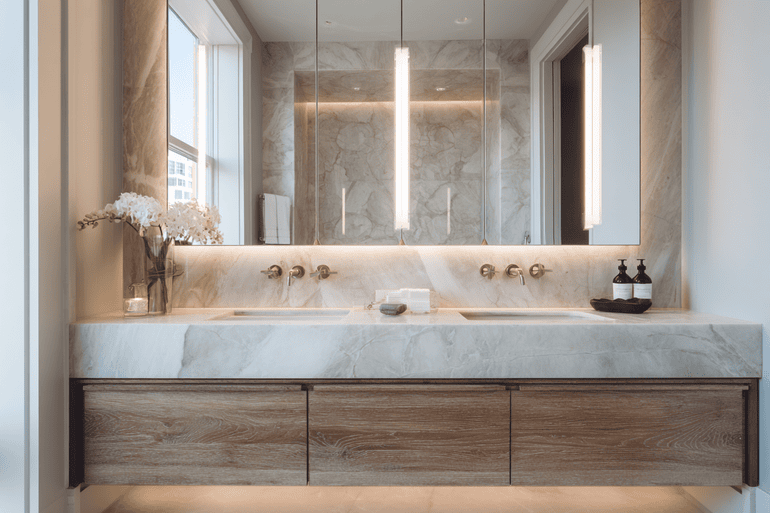
A single-vision design process means one lead designer holds final authority over every material, layout, and finish decision in a home, rather than the outcome being shaped by multiple people weighing in independently.
- One person is accountable for how every room connects to the next
- Contractors, architects, and vendors all report into one point of coordination
- Decisions get made once, correctly, instead of being revisited by committee
- The homeowner's preferences are translated through a single trained eye, not diluted across several
In New York City, where apartments and townhouses often involve co-op boards, multiple contractors, and tight timelines, this kind of centralized decision-making isn't a luxury preference. It's often the difference between a home that feels cohesive and one that feels like it was assembled in pieces.

What Single-Vision Design Leadership Actually Means
A single vision means every decision in the home, from the kitchen counter edge profile to the placement of a light switch, gets filtered through one person's design judgment. That person isn't just picking pretty things. They're tracking how each choice affects the ten decisions that come after it.
Here's where this matters. A cabinet finish chosen in isolation might look great on its own. But if it fights with the flooring tone selected three weeks later by someone else, the whole room reads as disjointed. A single lead avoids this because they're holding the full picture in their head from day one, not reacting to decisions made without them.
This is different from having a designer who simply executes requests. A true single-vision process means the designer has the authority to say no, to push back on a choice that undermines the whole, and to make calls when the homeowner isn't available or doesn't have a strong opinion yet.
Why Committee-Style Decisions Break Down in NYC Projects
Committee decision-making happens when multiple people, a spouse, an architect, a general contractor, a family member, all have input into design choices without one person owning the final call. It sounds collaborative. In practice, it usually slows everything down and produces a less coherent result.
What most people don't realize is that most design conflicts in NYC renovations aren't about taste. They're about sequencing. If the plumber picks a fixture location before the designer has finalized the vanity layout, someone has to redo work. If a spouse approves a paint color the same week the architect changes a window size, the color might no longer make sense in that light.
In a full-service interior design in NYC arrangement, these sequencing conflicts are avoided because one person is tracking the order of operations across every trade. Nobody makes an isolated decision that undoes someone else's work three steps later.
This is where things usually go wrong on committee-run projects: nobody notices the conflict until it's already built.

How Too Many Voices Slow Down a Renovation
More decision-makers on a project usually means more time, not better outcomes. Each additional person who needs to weigh in adds a round of review, a scheduling delay, or a change order once something gets built the "wrong" way.
In NYC specifically, timelines are already tight because of co-op board approval windows, building service elevator reservations, and DOB permit schedules. A renovation that depends on getting five people to agree on a tile selection can lose weeks waiting for everyone's calendar to align.
A single point of design authority removes that bottleneck. The designer makes the call, communicates it to the homeowner for final sign-off, and moves the project forward. Nobody is waiting on a group email thread to greenlight a decision that was really a two-minute conversation.
For most renovation projects in NYC, a full-service interior designer NYC clients trust with final say is the more practical structure. It's not about excluding the homeowner from decisions. It's about making sure someone is responsible for how those decisions fit together.

The Lead Designer's Role in Coordinating Everyone Else
A lead designer acts as the translation layer between the homeowner's goals and every trade professional working on the project. Architects, contractors, cabinet makers, and vendors all take direction from one coordinated vision instead of interpreting the client's wishes independently.
This coordination role rarely gets discussed, but it's where most of the value shows up. A general contractor is excellent at building what's specified. They're not typically trained to catch that a proposed ceiling height will make a custom light fixture look undersized, or that a floor plan change will orphan an outlet behind a future built-in.
In high-end residential work, this approach tends to produce the strongest results because the designer is the one person whose job is to notice these connections before they become expensive problems.
Here's a simple way to see the difference in how decisions get made:
| Single-Vision Leadership | Committee-Style Decisions | |
|---|---|---|
| Decision speed | Fast, one point of approval | Slow, multiple rounds of review |
| Consistency | Every choice ties to the whole | Choices made in isolation |
| Accountability | One person owns the outcome | Responsibility is diffused |
| Conflict handling | Resolved before construction | Often discovered mid-build |
| Homeowner involvement | Final sign-off on curated options | Constant back-and-forth on every detail |

What This Looks Like Behind the Scenes
Clients rarely see the coordination happening. That's intentional. A well-run, full-service interior design process handles vendor scheduling, material lead times, and trade sequencing without requiring the homeowner to manage any of it directly.
In practice, this means the homeowner sees a handful of well-curated decisions, a tile option here, a fabric swatch there, rather than the dozens of smaller logistical calls happening underneath. The designer is managing delivery windows, coordinating with the building superintendent, and adjusting the schedule around DOB inspection dates, all without putting that burden on the client.
This is the part of high-end interior design NYC homeowners often don't think about until they've experienced a project without it. When there's no single point of coordination, all of that logistical weight falls back on the homeowner by default.
When Homeowners Try to Manage It Themselves
Some homeowners start a renovation planning to make every decision personally, coordinating contractors and vendors on their own. This can work on very small projects. On larger NYC renovations, it tends to create the exact fragmentation a single-vision process is designed to prevent.
In NYC projects, this comes up often: a homeowner picks out beautiful individual pieces, a sofa here, a rug there, but the pieces don't relate to each other because no one was responsible for how they'd read together in the finished room. The result is a home full of good decisions that don't add up to a good outcome.
In New York City, most high-end renovations are led by full-service interior design firms because of the level of coordination involved. Between co-op board requirements, building-specific rules, and the sheer number of trades on a typical gut renovation, very few homeowners have the bandwidth to manage that volume of detail alongside their own jobs and families.

Signs Your Project Needs a Single Point of Vision
A project benefits from centralized design leadership when more than one of the following is true:
- Multiple decision-makers in the household have different aesthetic preferences
- The renovation involves several trades working in overlapping phases
- The building has co-op or condo board approval requirements
- The timeline is tight and delays would be costly
- The homeowner wants a cohesive look across multiple rooms, not just isolated updates
- Custom millwork, lighting, or architectural changes are involved
If most of these apply, a single-vision approach isn't just preferable. It's usually the only structure that keeps the project on schedule and visually coherent from room to room.
Frequently Asked Questions
What does "single-vision design" mean in a renovation?
It means one lead designer has final authority over how every material, layout, and finish decision fits together, rather than decisions being made independently by different people involved in the project.
Is single-vision design the same as not having input on my own home?
No. The homeowner still approves every major decision. The difference is that options are curated and coordinated by one designer first, rather than every choice being debated from scratch by multiple people.
Why do committee-style decisions cause delays in NYC renovations?
Because each additional decision-maker adds a round of review or scheduling coordination, and NYC projects already face tight windows for co-op board approval, permit timelines, and building access.
Can a general contractor provide the same coordination as a lead designer?
Not typically. Contractors are focused on building to spec. A lead designer is focused on how every decision across every trade fits into the overall design intent.
Does a single-vision approach cost more than managing the project myself?
It often prevents costs rather than adding them, since fewer decisions get reversed or rebuilt mid-project once a single person is tracking how choices interact.
What happens if my spouse and I disagree on design choices?
A lead designer typically works with both parties to find a direction that satisfies the goals of the home, then presents a curated set of options rather than an open-ended debate.
Is this approach only relevant for large renovations?
It matters most on larger or multi-trade projects, but even smaller full-home refreshes benefit from one person tracking how individual room decisions relate to each other.
How early should a single point of design leadership be established?
As early as possible, ideally before architectural plans are finalized, so that layout, finishes, and trade sequencing are considered together from the start.
What's the risk of not having centralized design leadership?
Decisions tend to get made in isolation, which often leads to conflicts discovered mid-construction, inconsistent finishes, and a home that feels assembled rather than designed.
Does single-vision design limit creativity or personalization?
It typically increases personalization, since the designer has full context on the homeowner's preferences and can apply that understanding consistently across the entire home rather than piecemeal.