

Penthouse Interior Design in NYC: Planning, Scale, and Execution
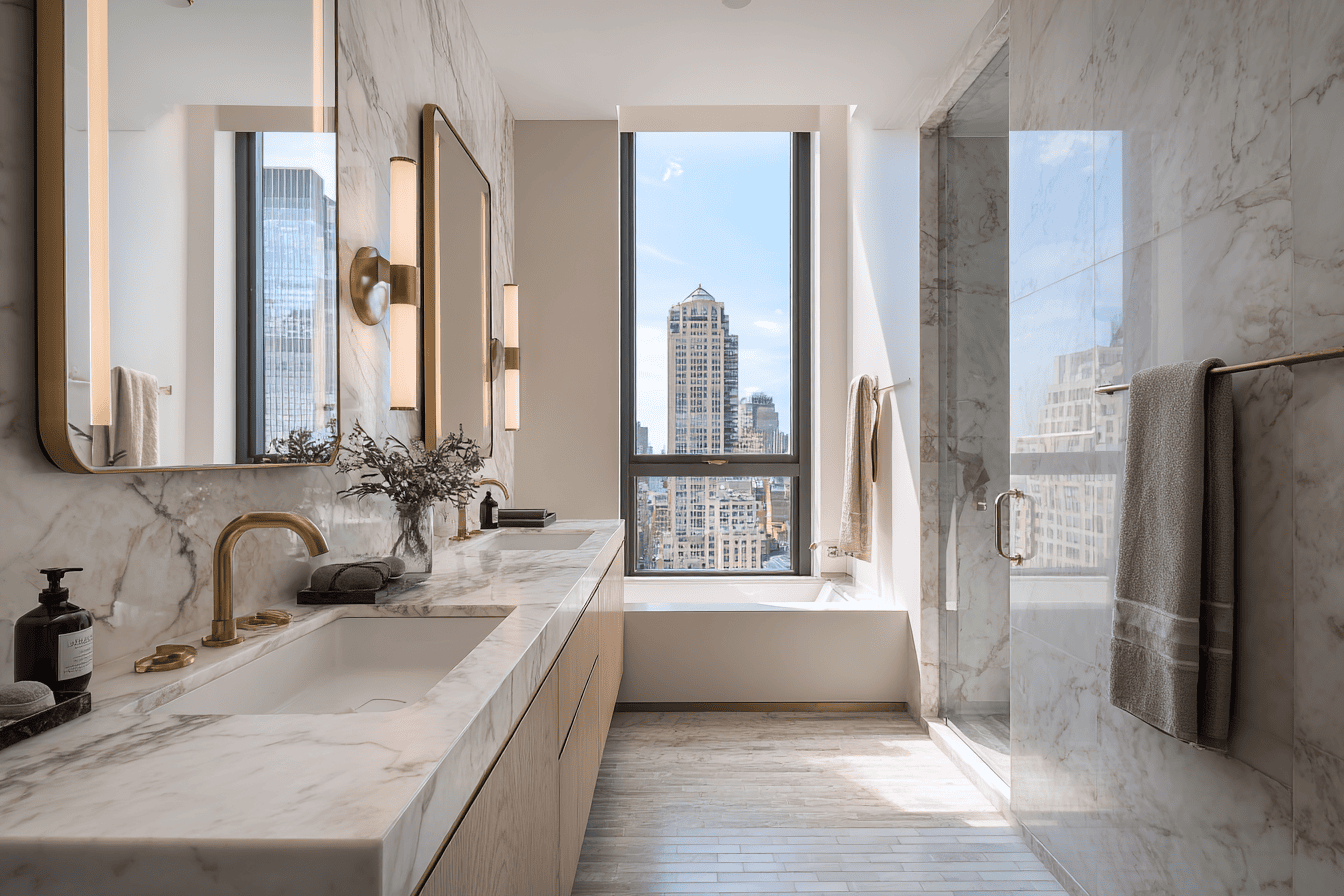
A high-end interior designer in New York City is responsible for planning, coordinating, and overseeing penthouse interiors from concept through installation, within the architectural, regulatory, and logistical constraints unique to NYC high-rise residential buildings.
A high-end interior designer in NYC is responsible for:
- Comprehensive spatial planning aligned with penthouse layouts, ceiling heights, and structural conditions
- Coordinating approvals with condominium boards, building management, and ownership entities
- Managing design documentation, consultant collaboration, and construction sequencing
- Specifying materials, finishes, and systems appropriate for high-rise performance requirements
- Overseeing procurement, delivery logistics, and white-glove installation under building restrictions
Penthouse projects in New York City operate under a distinct set of rules compared to other residential homes. Most are located in high-rise condominium buildings with strict requirements around construction hours, freight elevator usage, insurance, and contractor approvals. These constraints directly affect how a project is planned, sequenced, and executed.
In addition, many penthouse renovations involve structural considerations, façade-adjacent work, or mechanical coordination that trigger filings with NYC Department of Buildings (DOB). Understanding when DOB permits are required and how they intersect with building rules, is essential to avoiding delays and compliance issues.
Source: NYC Department of Buildings
Understanding the Scale of a Penthouse in NYC

Penthouse interiors are defined less by square footage and more by proportion, elevation, and exposure. Higher ceilings, expansive glazing, and private outdoor space change how rooms are experienced and how design decisions are made.
Scale matters because furniture, lighting, and finishes that work well in standard apartments can feel undersized or visually disconnected in a penthouse. Proper planning ensures that each element relates correctly to the volume of the space, not just its footprint.
In NYC, penthouses often sit directly below mechanical floors or adjacent to rooftop infrastructure. Designers must account for soffits, bulkheads, and access panels early in the design process to maintain clean sightlines.
Spatial Planning for Floor-to-Ceiling Windows and Views
Views are one of the defining features of a penthouse, and the layout must protect them. Furniture placement, circulation paths, and wall locations are planned to avoid blocking sightlines or creating visual clutter against glass.
This often means floating furniture away from walls and using low-profile pieces in key zones. Built-ins and storage are typically concentrated along interior walls to keep perimeter glazing unobstructed.
In NYC high-rises, window systems are fixed and cannot be modified. Designers work within these constraints while managing glare, privacy, and solar exposure through layered window treatments and lighting strategies.

Ceiling Heights, Vertical Proportion, and Lighting Strategy
Many NYC penthouses feature ceilings well above standard residential heights. While this creates a sense of openness, it also requires careful vertical planning to prevent spaces from feeling empty or acoustically harsh.
Lighting design becomes especially important. Layered lighting including architectural, decorative, and task sources helps visually lower ceilings and define zones within large open areas.
Chandeliers, pendants, and custom fixtures must be scaled appropriately and coordinated with building electrical capacity and ceiling conditions. These decisions are made early to avoid costly revisions later.
Material Selection for High-Rise Performance
Material choices in penthouses must balance aesthetics with performance. Weight limits, sound transmission, and expansion tolerances all affect what can be installed in a high-rise environment.
Natural stone, wide-plank flooring, and custom millwork are common, but they require coordination with structural engineers and building management. Some buildings restrict slab penetrations or impose limits on point loads.
Designers familiar with NYC penthouses select materials that meet building requirements while maintaining a refined, cohesive interior.

Mechanical, HVAC, and Systems Coordination
Penthouse layouts often interact closely with mechanical systems, including HVAC units, risers, and rooftop equipment. These systems are usually fixed and cannot be relocated without significant approvals.
Interior design decisions such as ceiling treatments, millwork, and lighting must align with these constraints. Access panels and clearances are integrated discreetly to maintain function without compromising appearance.
In NYC, mechanical changes may require DOB filings depending on scope. Early coordination reduces the risk of redesign or construction delays.
Condominium Board and Building Approvals
Most penthouses in NYC are located within condominium buildings governed by detailed alteration agreements. These agreements outline what work is permitted, how it must be documented, and who may perform it.
Designers prepare drawing sets, finish schedules, and scopes of work that align with these requirements. They also coordinate with building management to address questions before submission.
Approval timelines can vary widely. Understanding typical review cycles helps set realistic expectations and keeps the project moving forward.
Construction Sequencing in High-Rise Buildings
Construction in a penthouse follows a different rhythm than in a standalone home. Elevator reservations, limited work hours, and noise restrictions shape how trades are scheduled.
Materials must often be delivered in smaller batches and staged carefully to comply with freight rules. This affects everything from millwork installation to stone fabrication timelines.
A well-sequenced plan minimizes disruption to neighbors and reduces the risk of violations or stop-work orders.

Procurement and Logistics for Penthouse Projects
Furniture, lighting, and finishes for penthouses are frequently custom or made-to-order. Lead times must be coordinated with construction milestones and building access rules.
In NYC, some buildings require advance notice for large deliveries or limit the size of crates that can be brought through freight elevators. Designers plan procurement with these constraints in mind.
White-glove installation is typically scheduled over multiple days to allow careful placement without rushing or damage.
Installation and Final Execution
Installation in a penthouse is highly controlled. Floors and walls are often fully finished before furniture arrives, leaving little margin for error.
Designers oversee placement, alignment, and detailing to ensure the final result matches the approved design. Adjustments are made on site to account for real-world conditions.
The goal is a finished home that feels cohesive, functional, and appropriate to its scale, without visible compromises from building limitations.

Frequently Asked Questions
Do penthouse renovations in NYC require DOB permits?
Some penthouse projects require permits depending on the scope of work. Structural, mechanical, or plumbing changes typically trigger filings. Cosmetic updates may not, but this must be confirmed case by case.
How long does a penthouse interior design project usually take?
Timelines vary based on complexity, approvals, and lead times. Design and approvals can take several months, with construction and installation following.
Are there special rules for working in NYC penthouses?
Yes. Most buildings impose strict rules around work hours, elevator use, insurance, and contractor access. These rules shape the entire project plan.
Can walls or layouts always be changed in a penthouse?
Not always. Some walls are structural or tied to building systems. Changes must be reviewed by engineers and approved by the building.
How are large furniture pieces brought into a penthouse?
Furniture is delivered through freight elevators when possible. In rare cases, crane lifts may be required, subject to building and city approval.
Do penthouses have weight limits for materials?
Yes. High-rise buildings often impose load limits. Designers coordinate with engineers to ensure materials comply.
Is sound transmission a concern in penthouses?
It can be. Flooring assemblies and ceiling treatments are designed to meet acoustic requirements and reduce noise transfer.
Can rooftop or terrace areas be redesigned?
Outdoor spaces are governed by building rules and zoning regulations. Any changes require careful review and approval.