

Furnishing a Manhattan Pied-a-Terre From Scratch: What to Prioritize
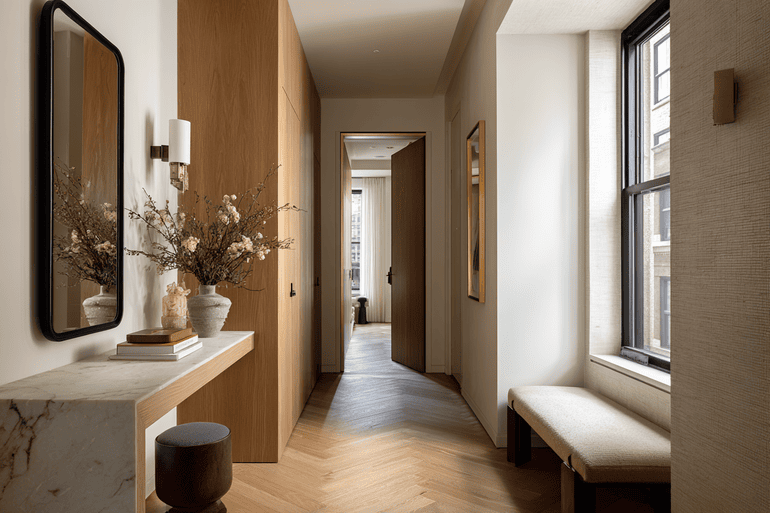
Furnishing a Manhattan pied-à-terre from scratch is about getting the essentials right first: the pieces that make the apartment comfortable, easy to maintain, and ready the moment you walk in. Everything else can be layered in over time.
The priorities, in rough order:
- Sleep: a properly sized, high-quality bed and blackout window treatments
- Lighting: a layered plan that works at night, when most pied-à-terre time happens
- Storage: closets and built-ins that let you leave clothing and essentials in place
- Seating: one or two pieces that work for a quiet evening alone and for a few guests
- Durability: materials that hold up while the apartment sits empty for weeks
- Lock-and-leave systems: climate control, security, and remote monitoring
In New York City, the order matters more than in most places. Apartments are compact, buildings have strict rules about deliveries and alterations, and custom pieces often take months to arrive. A pied-à-terre is also used differently from a primary home: in short stays, often after travel, and usually with no time to spare for problem-solving.

What Makes a Pied-à-Terre Different From a Primary Home
A pied-à-terre should be designed for arrival, not for daily routine. You aren't living there every day, so the apartment has to feel finished and functional the moment you open the door.
That changes the priorities. In a primary residence, you can live with a missing side table for a few months. In a pied-à-terre, small gaps feel larger because your time there is limited. A dead bulb or a missing towel bar becomes the thing you notice every visit.
What most people don't realize is that a pied-à-terre usually needs fewer things but better things. The goal isn't to fill the space. It's to make every piece earn its place.
The First Priority: The Bed and the Bedroom
The bed is the single most important purchase in a pied-à-terre. Many owners arrive after a flight or a long workday, and sleep quality shapes the whole stay.
Invest in a mattress you've actually tested, along with quality bedding in at least two full sets. One goes on the bed, one stays clean in storage, so the apartment is ready whether or not housekeeping has come.
Window treatments belong in this first phase too. Manhattan bedrooms rarely get true darkness, between streetlights, neighboring buildings, and early sun. Motorized blackout shades or lined drapery are worth prioritizing over almost any decorative piece.
Size the bed to the room, not the ideal
A king bed sounds right until it leaves 18 inches of clearance on each side. In many Manhattan bedrooms, a queen with proper nightstands and room to move feels more luxurious than a king that fills the space wall to wall.

Lighting and Window Treatments Come Next
Lighting matters more in a pied-à-terre than in almost any other home, because most of your time there happens in the evening. If the lighting is flat or harsh, the apartment never feels finished.
A good lighting plan has three layers:
- Ambient: recessed or ceiling fixtures for general light, on dimmers
- Task: reading lamps, under-cabinet kitchen lighting, vanity lighting
- Accent: lamps and picture lights that give the room warmth at night
In pre-war buildings, adding recessed lighting or new circuits often requires board approval and sometimes a DOB filing. Here's where this matters: if lighting work needs to happen, it should happen before furniture arrives, not after.
Seating That Works for Both Solitude and Hosting
The main seating should handle two situations well: an evening alone and a small dinner or drinks with a few guests. Most pied-à-terre living rooms can't accommodate every scenario, so design for the two you'll actually use.
A well-proportioned sofa and one comfortable chair usually cover it. Add a pair of small stools or a bench that can move where it's needed when guests come over.
Scale is the biggest risk here. A sofa that looks right in a showroom often overwhelms a Manhattan living room. It's also the piece most likely to fail at the door, which we'll come back to.
Storage Is the Quiet Make-or-Break
Good storage is what lets a pied-à-terre feel effortless. When you can leave a full wardrobe, toiletries, and essentials in place, you can arrive with nothing but a bag.
This is where custom millwork often pays for itself. Built-in closets, a well-planned entry cabinet, and bathroom storage that holds a full set of duplicates make a real difference on every visit.
In NYC projects, this comes up often. Owners furnish the visible rooms beautifully but leave closets with a single rod and a shelf. Within a few months, the apartment feels cluttered, and the problem is storage, not furniture.
A Kitchen Stocked for How You Actually Use It
A pied-à-terre kitchen should be stocked for your real habits, not for an imagined dinner party. Be honest about whether you'll cook, reheat, or mostly order in.
For most owners, a short list covers it:
- A good coffee setup
- A small set of quality cookware and knives
- Dinnerware and glassware for six to eight
- Serving pieces for entertaining
- A stocked pantry of shelf-stable basics
Turnkey preparation means all of this arrives unpacked, washed, and put away. The first time you walk in, there's coffee ready to make and glasses in the cabinet.

Materials That Hold Up When No One Is Home
Materials in a pied-à-terre need to hold up through both use and absence. An apartment that sits empty for weeks faces sun exposure, dry winter heat, and humidity swings without anyone there to notice.
A few practical choices:
- Fabrics: performance or tightly woven fabrics in sunny rooms, since fading happens quietly over time
- Wood: solid woods and quality veneers that tolerate seasonal humidity changes
- Stone: sealed surfaces in kitchens and baths that won't stain if something sits too long
- Rugs: wool or wool blends, which wear well and clean easily
This is where things usually go wrong. Delicate silks and untreated linens look beautiful at installation and tired a year later, especially in south- or west-facing apartments.
Technology for a Lock-and-Leave Apartment
A pied-à-terre should run reliably without you there. The right systems let you check on the apartment remotely and arrive to a comfortable space.
Prioritize:
- Smart thermostats you can adjust before arrival
- Water leak sensors near appliances, toilets, and radiators
- A smart lock or coordinated key management with the building
- Motorized shades on schedules, to protect furnishings from sun
- A simple, reliable Wi-Fi setup
Leak detection deserves special attention. In a shared building, a slow leak in an empty apartment can damage units below and lead to a difficult conversation with the board.
What Can Wait
Not everything needs to be in place on day one. A pied-à-terre can launch with the essentials and grow more personal over time.
These can usually wait for a second phase:
- Art and most decorative accessories
- Secondary rooms such as a study or guest room
- Statement pieces that require long custom lead times
- Books, objects, and collected items
A home that evolves over a year or two usually feels more personal than one finished in a single delivery. The key is that the second phase is planned from the start, so later pieces fit the original design.

The Logistics Most People Underestimate
Logistics are the hardest part of furnishing a Manhattan apartment from scratch. The furniture itself is rarely the problem. Getting it into the building is.
In New York City, most high-end furnishing projects are led by full-service interior design firms because of the level of coordination involved. Building rules, delivery scheduling, trade-only sourcing, and installation all have to line up, often across dozens of vendors.
Building rules and delivery windows
Most Manhattan co-ops and condos have specific rules for moves and deliveries. Expect requirements like:
- Freight elevator reservations, often limited to weekday hours
- Certificates of insurance from every delivery and installation company
- Padding requirements for elevators and hallways
- Restrictions on noise and work hours
Some co-ops also limit or closely review pied-à-terre ownership, and any alterations, even modest ones, may need board approval under the alteration agreement.
Measurements beyond the room
A sofa has to fit the elevator, the hallway turns, and the apartment door before it fits the living room. In pre-war buildings especially, these dimensions rule out many standard pieces. Larger items sometimes need to be specified as modular, built in sections, or hoisted.
Lead times and phasing
Custom upholstery and casegoods commonly take 12 to 20 weeks, sometimes longer for imported pieces. When items arrive at different times, each delivery means another building booking and another visit.
The common solution is to hold pieces at a receiving warehouse until everything is ready, then deliver and install in one coordinated day. For the client, the apartment goes from empty to finished without them managing a single delivery.
Turnkey Installation vs. Furnishing It Yourself
The main decision is whether to furnish the apartment yourself or hand it to a firm that delivers it complete. Both are possible. The right choice depends on how much time you have and how often you're in the city.
| Factor | Furnishing it yourself | Full-service turnkey |
|---|---|---|
| Sourcing | Retail and direct-to-consumer | Trade-only showrooms, custom workrooms |
| Deliveries | Multiple, scheduled by you | Consolidated, scheduled by the firm |
| Building coordination | Your responsibility | Handled for you |
| Timeline | Open-ended, often piecemeal | Planned with a single install date |
| Arrival experience | Unpacking and setup | Fully styled, stocked, move-in ready |
| Best for | Owners local to NYC with time | Owners traveling in or with limited time |
For most owners furnishing a pied-à-terre from another city or country, full-service interior design in NYC is the most practical path. The owner isn't there to meet deliveries, approve substitutions in person, or deal with a building manager's questions.
In high-end residential work, the turnkey approach also tends to produce the most cohesive result, since every piece is chosen and placed as part of one plan.

How to Decide Where to Start
Start with how you'll actually use the apartment, then work backward. A short honest assessment shapes every priority that follows.
Ask yourself:
- How often will I be there, and for how long?
- Will I host, or is this mostly a private retreat?
- Will family or guests use it when I'm not there?
- How much setup am I willing to manage myself?
A high-end interior designer NYC owners work with will usually begin with these same questions. The answers decide whether the budget goes toward a second bedroom, a dining setup, or simply the best possible bed and lighting.
If you're coming in from out of town, the timeline usually works best when design decisions happen remotely and you visit once or twice for key selections. The rest runs in the background until the apartment is ready.
Frequently Asked Questions
What should I buy first when furnishing a pied-à-terre?
Start with the bed, mattress, bedding, and window treatments. Sleep quality has the biggest impact on short stays, and blackout treatments are essential in most Manhattan bedrooms. Lighting and storage should follow closely.
How long does it take to furnish a Manhattan pied-à-terre from scratch?
A fully furnished pied-à-terre typically takes four to eight months when custom pieces are involved. Custom upholstery and casegoods often take 12 to 20 weeks to produce. Projects using mostly in-stock pieces can move faster.
Can I furnish a pied-à-terre remotely?
Yes. Many owners furnish their pied-à-terre while living in another city or country. A full-service firm handles sourcing, building coordination, deliveries, and installation, so the owner only needs to review selections and visit for final walkthroughs.
What size furniture works best in a Manhattan apartment?
Furniture should be scaled to the room and to the building's access points. A piece must fit the elevator, hallways, and doorways before it reaches the room. In pre-war buildings, modular or sectional pieces are often the safest choice.
Do I need building approval to furnish an apartment in NYC?
Furnishing alone usually doesn't require board approval, but deliveries must follow building rules. Most buildings require freight elevator reservations and certificates of insurance from vendors. Any alterations, such as new lighting or built-ins, typically require approval under the alteration agreement.
What does turnkey furnishing mean?
Turnkey furnishing means the apartment is delivered completely ready to use. Furniture, art, linens, kitchenware, and accessories are installed and styled before the owner arrives. The owner walks in to a finished home.
How do I protect furniture in a pied-à-terre that sits empty?
Use durable, fade-resistant fabrics, motorized shades on schedules, and smart climate control. Water leak sensors are also important. These steps protect furnishings from sun, humidity changes, and leaks while no one is home.
Should a pied-à-terre have a fully equipped kitchen?
A pied-à-terre kitchen should match how the owner actually eats. Most need a good coffee setup, quality basics for cooking, and dinnerware for six to eight. Owners who rarely cook can keep the kitchen simple.
Is it worth hiring an interior designer for a pied-à-terre?
For most owners, yes, especially those who don't live in New York full time. A full-service interior design firm in NYC manages trade sourcing, building logistics, and installation, which are the most time-consuming parts of the project.