

Furnishing a Luxury NYC Apartment From Scratch: What Actually Needs to Be Planned
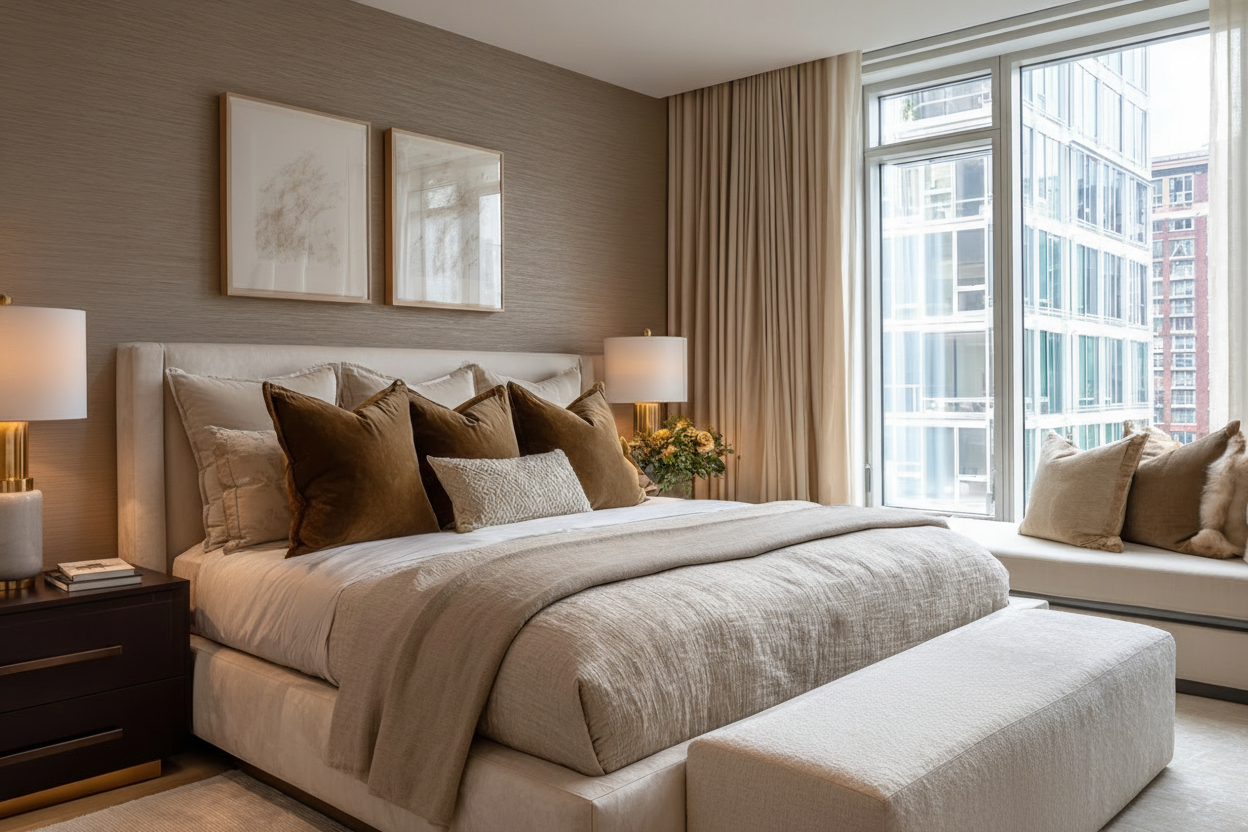
Furnishing a luxury NYC apartment from scratch requires planning the layout, lighting, power, window treatments, sourcing timelines, budget, and building logistics before a single piece of furniture is ordered.
Most people start with the sofa. In practice, the sofa is one of the last decisions that should be locked in. A well-furnished apartment is built on decisions that are mostly invisible once the room is finished:
- Space planning that works with real dimensions, not estimates
- Lighting and electrical placed where the furniture will actually sit
- Window treatments chosen early enough to wire for motorization
- Lead times for custom and to-the-trade pieces, often 12 to 24 weeks
- Budget allocation across every category, not just the large pieces
- Building logistics, including freight elevators, certificates of insurance, and delivery windows
- Receiving and installation, so everything arrives and goes in at once
In New York City, this list gets longer. Co-op and condo buildings have their own rules about deliveries and work hours. Pre-war apartments have narrow doorways, tight stair turns, and walls that are rarely square. A piece that fits the room on paper may not fit through the service entrance.
Here's the order of operations, and why each step matters.

Why Furnishing From Scratch Is a Planning Project, Not a Shopping Project
Furnishing an empty apartment well depends more on sequencing than on taste.
When there's nothing in a room yet, every decision affects the next one. The rug size depends on the furniture plan. The furniture plan depends on where the outlets are. The outlets depend on the lighting plan. If you shop first and plan later, you end up working backward around pieces that don't quite fit.
This is where things usually go wrong. Someone falls in love with a dining table, orders it, and only then realizes the chandelier junction box is three feet off center. Now the choice is between moving the box (which may need building approval) or living with a fixture that doesn't line up.
A finished room should feel effortless. Getting there is mostly a matter of making decisions in the right order.
Step 1: Start With an Accurate Floor Plan and Measurements
Every furnishing decision should be based on a measured floor plan, not on listing drawings or rough estimates.
Broker floor plans are marketing documents. They're useful for a general sense of the layout, but they're not reliable for ordering furniture. A proper plan captures:
- Exact wall lengths and ceiling heights
- Window positions, sill heights, and radiator or HVAC unit locations
- Door swings and clearances
- Existing outlets, switches, and ceiling boxes
- Columns, soffits, and beams that affect placement
In NYC projects, this comes up often. Pre-war apartments have plaster walls that bow, ceilings that change height between rooms, and radiators placed exactly where a sofa would want to go. Newer condos have their own surprises, like structural columns hidden inside closets or HVAC units under the windows.
Measure the Path In, Not Just the Room
What most people don't realize is that the route into the apartment matters as much as the room itself.
Measure the building entrance, the freight elevator (interior height, width, depth, and door opening), hallway turns, and the apartment door. A 108-inch sofa may fit the living room perfectly and still be impossible to deliver. Custom upholstery can sometimes be built with removable arms or in sections, but that has to be decided before it's made.

Step 2: Build the Furniture Layout Around How You'll Live
A furniture layout should be planned around daily routines first and visual balance second.
Think about how each room will actually be used. Where do you read? Where does the television go, and do you want it visible all the time? How many people sit at the dining table on a normal night, and how many for a dinner party?
A good layout plan covers:
- Conversation areas with seating close enough to talk comfortably (roughly 8 to 10 feet across)
- Circulation paths of at least 30 to 36 inches through main walkways
- Furniture scale relative to ceiling height and window size
- Sightlines from the entry, so the first view of the apartment feels intentional
Scale Is the Most Common Mistake
Undersized furniture is one of the clearest signs of an apartment that was furnished piece by piece.
Large rooms with high ceilings need furniture with presence. A standard 84-inch sofa can look lost in a 25-foot living room. The same applies to rugs, art, and light fixtures. Planning the full layout at once lets you see scale across the whole space before anything is ordered.
Step 3: Plan Lighting and Electrical Before Furniture Is Final
Lighting and electrical work need to be coordinated with the furniture plan, because outlets and fixtures are difficult to move once walls and floors are finished.
Here's where this matters. A sofa floating in the middle of a room needs a floor outlet for its lamps. A desk needs power where it sits, not across the room. A dining chandelier should hang centered over the table, not centered in the ceiling.
Lighting should be planned in layers:
- Ambient lighting for general illumination (recessed, cove, or ceiling fixtures)
- Task lighting for reading, cooking, and work
- Accent lighting for art, shelving, and architectural details
- Decorative lighting like chandeliers, sconces, and lamps that add character
Controls and Technology
Lighting control systems, motorized shades, audio, and Wi-Fi coverage all need wiring decisions early.
If you plan to use a system like Lutron for scenes and dimming, the keypads, panels, and wiring runs have to be coordinated with your electrician. In co-ops and condos, electrical work typically falls under the alteration agreement, which means it needs building approval before it starts. Adding it after the furniture arrives is possible, but it's slower, more disruptive, and more expensive.

Step 4: Decide on Window Treatments Early
Window treatments should be selected before or alongside furniture, because they affect power, hardware, light, and the overall look of every room.
In NYC, windows carry a lot of weight. They're often the main source of light, the main view, and the main privacy concern. Window treatments also take time. Custom drapery and motorized shades frequently run 8 to 14 weeks.
Things to plan for:
- Motorization, which may need hardwired power at the window head
- Blackout needs for bedrooms facing street lights or other buildings
- Ceiling pockets or recessed tracks for a cleaner look, if there's a renovation underway
- Stack-back space so drapery doesn't block the glass when open
Ordering drapery last often means living with bare windows for months after everything else is installed.
Step 5: Understand Lead Times and Sourcing
High-end furniture is rarely available to take home this week, and planning around lead times is what keeps a project on schedule.
Typical timelines for luxury furnishings look something like this:
| Item Type | Typical Lead Time |
|---|---|
| In-stock retail pieces | 1 to 4 weeks |
| To-the-trade upholstery | 12 to 20 weeks |
| Custom furniture and millwork | 16 to 24+ weeks |
| Custom rugs | 16 to 26 weeks |
| Imported European pieces | 14 to 24+ weeks, plus shipping |
| Custom drapery and motorized shades | 8 to 14 weeks |
| Lighting fixtures | 6 to 16 weeks |
These are general ranges. Workroom backlogs, fabric availability, and international shipping can stretch them further.
Trade-Only Sourcing
Many of the best pieces for a luxury apartment are only sold through designers.
Showrooms at places like the New York Design Center and the D&D Building carry furniture, fabrics, and lighting that aren't available to the public. These pieces often come with better construction, more customization options, and access to custom finishes. They also come with order paperwork, deposits, freight coordination, and quality inspection that someone has to manage.
Step 6: Set a Realistic Budget Across Every Category
A furnishing budget should cover every category in the apartment, including the items that are easy to forget.
Most people budget for the large pieces: sofa, bed, dining table. The total gets surprising when everything else is added in. A complete budget accounts for:
- Upholstery and case goods
- Rugs (often more than expected for custom or hand-knotted)
- Lighting, including decorative fixtures and lamps
- Window treatments and hardware
- Bedding, linens, and pillows
- Art and art installation
- Accessories, books, and objects
- Freight, receiving, storage, and delivery
- Installation labor
- Sales tax and any import duties
Here's where this matters. When the budget is spent on the first few rooms, the last rooms end up underfurnished or filled in with placeholders. Allocating across the whole apartment from the start keeps the quality consistent from the entry to the guest room.

Step 7: Coordinate Building Rules and Logistics
Building logistics in New York City often determine when and how furniture can actually be delivered and installed.
Co-op and condo buildings typically require:
- Certificates of insurance (COIs) from every delivery company and installer, often naming the building and management company
- Freight elevator reservations, usually limited to weekday business hours
- Delivery windows that may exclude weekends and holidays
- Floor and elevator protection during moves
- Advance notice to the super or managing agent
Some buildings restrict deliveries during certain seasons or require a building staff member to be present. Oversized pieces may need to be hoisted through a window, which requires its own permits, insurance, and crane or rigging crew.
In New York City, most high-end furnishing and renovation projects are led by full-service interior design firms because of the amount of coordination involved between showrooms, workrooms, freight companies, building management, and installers.
Step 8: Plan for Receiving, Storage, and a Single Installation
The cleanest way to furnish a luxury apartment is to receive everything at a warehouse and install it all at once.
Because pieces arrive on different timelines, deliveries straight to the apartment mean months of boxes, partial rooms, and repeated building bookings. A receiving warehouse solves this. Each piece is inspected on arrival, damage is caught before it reaches your home, and items are held until the full order is ready.
Then everything is delivered and installed over a planned period, often one to three days. Furniture is placed, art is hung, lamps are styled, beds are made, and packaging is removed.
For clients working with a full-service team, this is often the first time they see the apartment complete. They don't track shipments, schedule elevators, or check for scratches. That work happens in the background, and what they walk into is a finished home.
Step 9: Finish With Art, Accessories, and Styling
Art and accessories are what make a well-furnished apartment feel personal rather than staged.
These pieces are often treated as an afterthought, but they're worth planning early. Large-scale art affects wall placement and lighting. Sculpture may need a pedestal or reinforced shelf. A collector's existing pieces should shape the room plan from the beginning, not be squeezed in at the end.
Styling covers books, objects, pillows, throws, and tabletop pieces. Done well, it makes the apartment feel lived in from the first day.

Furnishing It Yourself vs. Working With a Full-Service Designer
The right approach depends on the size of the project, the timeline, and how much coordination you want to manage personally.
| Factor | Furnishing Yourself | Full-Service Interior Design |
|---|---|---|
| Space planning | Done by homeowner, often room by room | Whole-apartment plan before ordering |
| Sourcing | Mostly retail | Retail plus trade-only showrooms and custom workrooms |
| Lead time management | Homeowner tracks each order | Designer tracks and expedites |
| Building logistics | Homeowner handles COIs and elevators | Coordinated by the design team |
| Receiving and damage claims | Direct to apartment, homeowner inspects | Warehouse receiving and inspection |
| Installation | Piece by piece over months | Single coordinated install |
| Time commitment | High | Minimal, decisions only |
Furnishing a single room or a smaller apartment yourself is very manageable. Furnishing an entire luxury apartment from scratch is a different scale of project.
For most clients furnishing a full apartment in Manhattan, full-service interior design in NYC is the most practical choice, simply because of the number of moving parts involved. A high-end interior designer in NYC brings the trade relationships, vendor management, and building familiarity that keep a project from stretching on for a year or more.
How a Full-Service Furnishing Project Typically Flows
A full-service furnishing project usually moves from planning to design to procurement to installation.
- Discovery and measurement: understanding how you live, then measuring the apartment and the delivery route
- Space planning: layouts for every room, with lighting and electrical coordination
- Design development: furniture, fabrics, finishes, lighting, and window treatments presented together
- Budget approval: a complete, itemized proposal before orders are placed
- Procurement: ordering, tracking, expediting, and quality control
- Receiving and storage: warehouse inspection and consolidation
- Installation and styling: everything delivered, placed, and finished
In high-end residential work, this sequence tends to produce the strongest results because each decision is made with the full picture in view. Clients stay involved in the creative choices, while the operational work runs quietly in the background.
Frequently Asked Questions
How long does it take to furnish a luxury NYC apartment from scratch?
Furnishing a luxury NYC apartment from scratch typically takes 6 to 12 months from first design meeting to final installation. Custom and trade-only pieces commonly carry lead times of 12 to 24 weeks, and design development usually takes 2 to 3 months before ordering begins.
What should be planned first when furnishing an empty apartment?
The floor plan and furniture layout should be planned first. Lighting, electrical, rug sizes, and window treatments all depend on knowing where the furniture will go.
Do I need an interior designer to furnish my apartment?
You don't need one for a single room or a small space, but for a full luxury apartment, working with a full-service interior designer is the most common approach in NYC. The coordination of trade sourcing, lead times, building rules, and installation is significant.
How much does it cost to furnish a luxury apartment in Manhattan?
Costs vary widely based on size, sourcing, and level of customization. Fully furnishing a luxury Manhattan apartment with trade and custom pieces commonly runs well into six or seven figures, and the budget should include freight, storage, installation, art, and window treatments, not just furniture.
Why do high-end furniture pieces take so long to arrive?
Most high-end furniture is made to order. Upholstery is built once fabric is confirmed, finishes are applied by hand, and many pieces are produced in Europe and shipped internationally.
What building rules affect furniture delivery in NYC?
Most NYC co-ops and condos require certificates of insurance from delivery companies, freight elevator reservations, weekday delivery windows, and floor protection. Some buildings also limit delivery times or require advance approval for oversized items.
What happens if a piece of furniture doesn't fit through the door?
If a piece doesn't fit, options include removing the door, disassembling the piece, or hoisting it through a window with a rigging crew. Measuring the delivery route before ordering prevents most of these situations.
Should window treatments be ordered at the same time as furniture?
Yes. Custom drapery and motorized shades can take 8 to 14 weeks, and motorization may require electrical work. Ordering them alongside furniture keeps the apartment from being finished with bare windows.
What is a receiving warehouse and why does it matter?
A receiving warehouse accepts, inspects, and stores furniture as it arrives from different vendors. It allows damage to be caught early and lets everything be delivered and installed in one coordinated visit.
Can I keep some of my existing furniture?
Yes. Existing pieces, especially art and heirlooms, should be measured and included in the layout from the start so new pieces are chosen to work with them.
The Bottom Line
Furnishing a luxury NYC apartment from scratch is mostly about planning in the right order: layout, lighting, power, window treatments, lead times, budget, and building logistics, then installation.
When those decisions are made together, the result feels cohesive and calm. When they're made one purchase at a time, the apartment tends to show it. For homeowners who want the finished result without managing the process, working with a high-end interior designer in NYC is the approach most people in this market end up choosing.