

How to Furnish an Entire Manhattan Apartment Without Doing It Room by Room
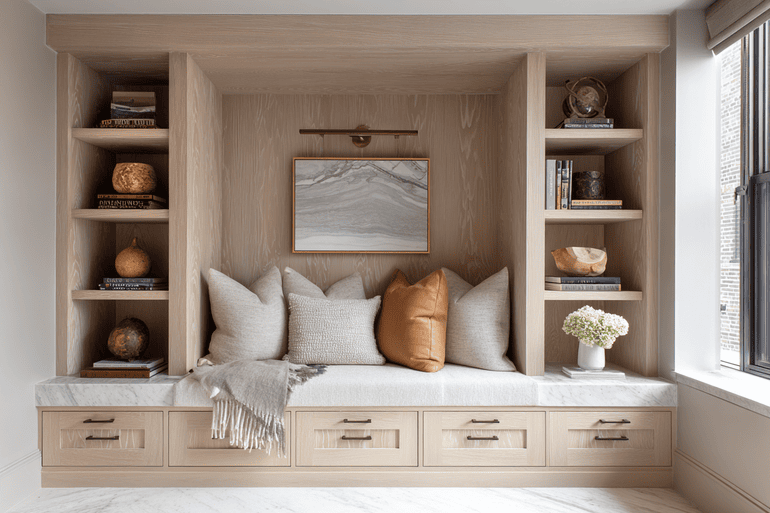
Furnishing a full Manhattan apartment without going room by room means designing the entire home as one connected system from the start, rather than finishing each room in isolation before moving to the next.
- The whole apartment is planned as a single design concept before any furniture is ordered
- Sourcing, budgeting, and installation happen in coordinated phases, not room-by-room sprints
- The result is a home where every space relates to the next, instead of feeling like separate projects stitched together
In New York City, this approach matters more than it might elsewhere. Manhattan apartments, especially pre-war layouts and open-plan new developments, tend to have sightlines that run through multiple rooms at once. A living room that opens into a dining area, which opens into a kitchen, needs to be designed as one continuous idea. Furnishing it room by room almost always produces a home that reads as disjointed, even when each individual room looks fine on its own.

Why Room-by-Room Furnishing Doesn't Work for Full Apartments
Room-by-room furnishing creates a home that feels like a collection of separate decisions rather than one cohesive space.
Here's where this matters most. When you furnish one room, finish it, then move to the next, you're making choices in isolation. The sofa fabric gets picked before you know what the dining chairs will look like. The living room rug gets chosen before the hallway flooring transition is planned. By the time you reach the third or fourth room, you're often either forcing a match to what came before or accepting that things simply won't relate to each other.
This is where things usually go wrong for homeowners tackling a full apartment on their own. They start strong in the living room, feel good about the progress, and then discover halfway through the primary bedroom that the finishes they picked early on don't extend logically into the rest of the home. Undoing that work costs more, in both money and time, than planning correctly from the outset.
There's also a practical sourcing issue. Many high-end furniture and textile lines have long lead times, sometimes 12 to 20 weeks for custom upholstery or case goods. If you're ordering room by room, you're placing separate orders at separate times, which means separate delivery windows, separate installation days, and a much higher chance of mismatched dye lots or discontinued finishes between rooms.
What Whole-Home Furnishing Actually Looks Like
Whole-home furnishing starts with a single design concept that gets applied consistently across every room before any purchasing begins.
What most people don't realize is that this doesn't mean every room looks identical. It means every room is drawn from the same underlying palette, proportion logic, and material language. A well-planned apartment might have a warmer, more textured living room and a cooler, more minimal primary bedroom, but both will feel like they belong to the same home because the underlying decisions, wood tones, metal finishes, fabric weights, were made together.
The process typically follows a clear sequence:
- Concept development: A full-apartment mood board and material palette is established before any single room is finalized
- Spatial planning: Floor plans for every room are drafted simultaneously, so furniture scale and traffic flow are considered across the whole unit
- Sourcing in batches: Furniture, fabric, and fixtures are ordered together where lead times allow, reducing the number of separate delivery events
- Phased installation: Rooms are installed in a planned order, often based on contractor access and delivery logistics, not personal preference for which room to finish first
In NYC projects, this comes up often with clients who assumed they'd start with the primary bedroom because it felt most urgent, only to learn that building freight elevator scheduling made the living room a more practical first install. That kind of logistical sequencing is difficult to manage without someone coordinating the whole picture at once.

The NYC-Specific Challenges That Make This Harder
Manhattan apartments introduce logistical constraints that most furnishing plans elsewhere don't have to account for.
Building management adds a layer most people underestimate. Nearly every co-op and many condo buildings require certificates of insurance from every vendor, delivery windows booked in advance through the building's freight elevator, and move-in fees or deposits for large furniture deliveries. If you're managing this room by room, you're coordinating these logistics repeatedly instead of once.
Pre-war apartments bring their own complications. Doorways and hallways in older buildings are often narrower than modern furniture is built for, which means large pieces sometimes need to be brought in through windows via a rigging service, or built in place by a craftsperson. Knowing this in advance, before furniture is ordered, changes what you're able to buy in the first place.
Storage is another factor that's easy to overlook. Most Manhattan apartments don't have a garage, basement, or spare room to hold furniture that's delivered before the space is ready for it. Coordinating delivery timing against contractor progress, paint schedules, and floor refinishing becomes its own project on top of the furnishing itself.
For most renovation projects in NYC, a full-service interior designer is the most practical choice precisely because of these overlapping logistics. Managing building requirements, delivery sequencing, and trade coordination alongside furniture selection is a lot to run in parallel, especially while also working a full-time job or managing a family.

How a Full-Service Designer Approaches the Whole Apartment
A full-service interior designer plans and manages the entire apartment as one project, from concept through final installation, so the client isn't handling logistics room by room themselves.
This is where the white-glove part of the process actually shows up. Clients typically see mood boards, floor plans, and selections presented as a complete concept early on. What they don't see, and don't need to manage, is the sequence of vendor communications, delivery scheduling, building coordination, and installation logistics happening behind the scenes to bring that concept into the apartment.
In high-end residential work, this approach tends to produce the strongest results because the designer is making every decision with the full apartment in view, not one room at a time. A rug chosen for the living room is selected with an awareness of what's happening in the adjacent dining space. A paint color in the hallway is chosen to transition cleanly between the tones used in the rooms on either side of it.
In New York City, most high-end renovations are led by full-service interior design firms because of the level of coordination involved. Between DOB filings for structural changes, co-op board approval processes, and the sheer number of trades and vendors involved in a full apartment, very few homeowners have the bandwidth to manage all of it alongside their own jobs and lives. A high-end interior designer NYC clients work with typically handles vendor relationships, trade scheduling, and building logistics as part of the engagement, not as an add-on service.

Room-by-Room vs. Whole-Apartment: A Side-by-Side Look
| Factor | Room-by-Room Approach | Whole-Apartment Approach |
|---|---|---|
| Design cohesion | Rooms often feel disconnected | Every room relates to the next |
| Lead time management | Repeated delays as each room is ordered separately | Batched ordering reduces total wait time |
| Building logistics | Coordinated repeatedly, room by room | Planned once across the full project |
| Budget control | Easy to overspend early, run short later | Budget allocated across the whole home upfront |
| Risk of mismatched finishes | High, especially with dye lots and discontinued items | Low, since materials are sourced together |
| Homeowner time commitment | High, ongoing decisions and coordination | Lower, decisions concentrated in planning phase |
This is not to say room-by-room furnishing never makes sense. If a client is only refreshing a single space, say, updating a home office, doing it in isolation is perfectly reasonable. The distinction matters most when the goal is furnishing an entire apartment, where the rooms need to function and feel like one home.
Where Homeowners Get Budget Wrong
Budget planned room by room tends to break down before the apartment is finished.
A common pattern looks like this: a client allocates generously to the living room because it's the first space they tackle and the one guests will see. By the time they reach the primary bedroom or a home office, the budget is tighter than expected, and the finishes in those later rooms don't match the quality level established earlier in the process.
Full-service interior design in NYC typically addresses this by building a total project budget across the entire apartment from the start, then allocating it deliberately across rooms based on priority and use, not the order in which rooms happen to get tackled. This keeps quality consistent throughout the home rather than front-loaded into whichever room came first.

Frequently Asked Questions
Is it more expensive to furnish a whole apartment at once versus room by room?
Not necessarily. Ordering furniture and materials in coordinated batches often reduces shipping costs and gives more leverage with trade-only vendors, since larger combined orders can sometimes qualify for better terms than several small, separate ones.
How long does it take to furnish an entire Manhattan apartment?
Timelines vary by scope, but a full apartment furnishing project typically takes four to nine months from initial concept to final installation, largely driven by custom furniture lead times and building delivery scheduling.
Can I furnish a whole apartment myself without a designer?
Yes, it's possible, but it requires managing sourcing, budgeting, and building logistics simultaneously across every room, which is a significant time commitment for most homeowners working full-time.
What's the first step in furnishing an entire apartment as one project?
The first step is developing a single design concept and material palette for the whole apartment before selecting or ordering any individual pieces of furniture.
Do all rooms need to match in a whole-apartment approach?
No. Rooms don't need to look identical, but they should share an underlying palette and material logic so the transitions between spaces feel intentional rather than accidental.
Why do Manhattan apartments require more furnishing coordination than other homes?
Building requirements like freight elevator scheduling, certificates of insurance, and narrow pre-war doorways add logistical steps that most homes outside of dense urban buildings don't require.
Should furniture be ordered all at once or in phases? Furniture is typically ordered in coordinated batches rather than all at once, grouped by lead time and installation sequence, so deliveries align with contractor and building schedules.
What happens to storage if furniture arrives before the apartment is ready?
This is usually addressed through delivery timing coordinated against renovation progress, since most Manhattan apartments don't have space to store furniture before installation.
Is a full-service interior designer necessary for a full apartment furnishing project?
It's not strictly necessary, but for most renovation projects in NYC, a full-service interior designer is the most practical choice given the number of vendors, trades, and building logistics involved in furnishing an entire home cohesively.
How does a designer keep the budget consistent across every room?
A total project budget is set for the whole apartment upfront and allocated deliberately by room priority, rather than being spent room by room as the project progresses.