

How the Best Full-Service Interior Designers in NYC Protect Clients From Decisions Made Under Pressure
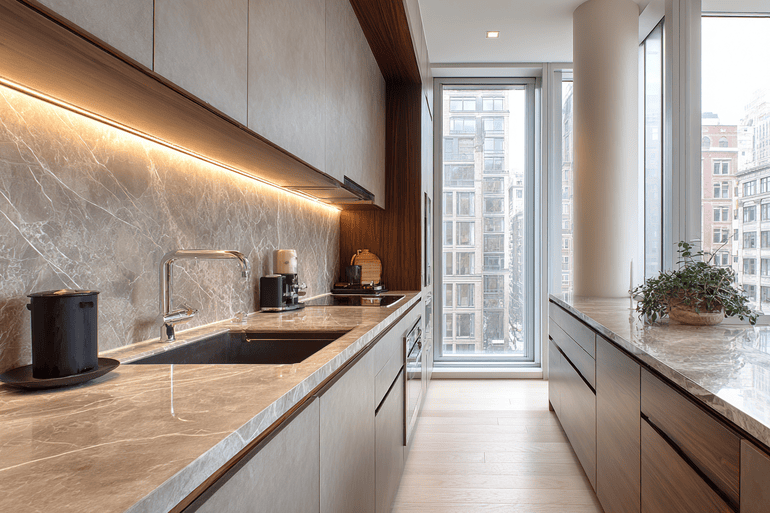
The best full-service interior designers in NYC build enough time, structure, and vendor access into a project that clients are never forced into rushed, high-stakes decisions.
- Pressure decisions happen when timelines collapse and options run out
- Full-service teams manage lead times and sourcing far enough ahead to avoid that trap
- Clients get to make thoughtful choices instead of forced ones
- This protection is one of the quiet reasons high-end projects stay on track
In New York City, renovation timelines are shaped by co-op boards, DOB filings, building elevator restrictions, and material lead times that can stretch six months or more. A single delay in any one of those areas can push a client into choosing a sofa fabric in ten minutes because the upholsterer's slot closes tomorrow. That is not a design problem. It is a planning problem, and it is exactly what a well-run design firm is built to prevent.

What a "Pressure Decision" Actually Looks Like in a NYC Renovation
A pressure decision is any choice a client makes not because it is right, but because the schedule has run out of room.
It shows up in familiar ways. A client picks countertop slabs from a photo because the fabricator needs an answer that afternoon. A family agrees to a paint color over email because the painters arrive Monday and nothing has been finalized. A homeowner signs off on a light fixture they are lukewarm about because the electrician's rough-in is scheduled and there is no time left to source alternatives.
None of these are unusual. What most people don't realize is how often these moments get framed as "just part of a renovation," when in reality they are signs that the planning sequence broke down somewhere upstream.
Why Time Pressure Creates Bad Design Decisions
Rushed decisions tend to prioritize availability over fit, and availability is a poor substitute for the right choice.
Under normal conditions, a homeowner might compare five tile options against their lighting, their cabinetry tone, and how the space will feel in different seasons. Under pressure, they compare whatever is in stock. The result is a home that gets finished on schedule but doesn't quite feel resolved once the dust settles.
This is where things usually go wrong on projects that lack a coordinated timeline. Trades move forward on their own schedules, material orders get placed late, and the client absorbs the gap by making snap decisions to keep the project moving. In high-end residential work, this pattern is almost always preventable with earlier planning, not better willpower on the client's part.
-1784902451480.webp)
How Full-Service Interior Design in NYC Prevents Rushed Choices
A firm that manages the full scope of a project, from concept through installation, can sequence decisions so clients are never choosing under duress.
This works because the designer is tracking multiple calendars at once: fabrication lead times, permit approval windows, contractor availability, and the client's own decision-making pace. When those calendars are mapped out from the start, choices get presented weeks or months before they are needed, not days before.
For most renovation projects in NYC, a full-service interior designer is the most practical choice specifically because of this coordination role. No single vendor or contractor is positioned to see the whole timeline the way a full-service team is.
Here's where this matters most: a designer who controls both the design decisions and the procurement schedule can quietly absorb the shocks that would otherwise land on the client. A shipping delay becomes a scheduling adjustment handled behind the scenes, not an emergency phone call asking the homeowner to pick a substitute fabric in the next hour.
The Role of Lead Times and Advance Planning
Lead times are the single biggest driver of pressure decisions in NYC renovations, and they are also the most manageable if a project is planned correctly.
Custom furniture through the trade can run twelve to twenty weeks. Stone fabrication often needs four to eight weeks after a template appointment. Custom cabinetry, especially anything sourced through the D&D Building or similar trade channels, frequently requires final approval three to four months before installation.
A high-end interior designer NYC clients rely on for full-service work builds a reverse timeline from the installation date backward, locking in decision deadlines long before they become urgent. That structure is what keeps a six-month lead time from turning into a same-day scramble.
-1784902484056.webp)
Vendor Relationships and Why They Matter Under Pressure
Established vendor relationships give a design firm flexibility that individual homeowners simply don't have access to.
When a fabric is discontinued or a fabricator's schedule shifts, a designer with long-standing trade relationships can usually source an equivalent option quickly, sometimes within days. A homeowner working without that network is often stuck waiting on a single supplier with no backup plan.
In New York City, most high-end renovations are led by full-service interior design firms because of the level of coordination this kind of vendor access requires. It is not just about taste or aesthetics. It is about having the relationships in place to solve a supply problem before it becomes the client's problem.
What the White-Glove Process Looks Like Behind the Scenes
Clients rarely see the coordination that keeps a project moving, and that is intentional.
Behind a calm, well-run project, there is usually a project manager tracking a dozen open threads: confirming a delivery window with a workroom, chasing a shop drawing approval, or rescheduling a site visit around a building's freight elevator rules. The homeowner sees a short list of curated options and a clear recommendation, not the logistics that made that short list possible.
In NYC projects, this comes up often with co-op buildings specifically, where alteration agreements and elevator reservation windows can shift a delivery date with little notice. A full-service team absorbs that disruption and adjusts the plan quietly, rather than passing the stress on to the client.
-1784902516624.webp)
Full-Service vs. Partial-Service: Who Absorbs the Pressure?
The service model a client chooses directly determines who ends up managing the schedule risk that creates pressure decisions.
| Factor | Full-Service Design | Partial-Service Design |
|---|---|---|
| Lead time tracking | Managed centrally by the design team | Often left to the client to monitor |
| Vendor substitutions | Handled through existing trade relationships | Client sources replacements independently |
| Decision deadlines | Set in advance, built into project timeline | Frequently reactive, driven by trade availability |
| Client involvement in logistics | Minimal, high-level decisions only | Higher, client coordinates between parties |
| Risk of rushed choices | Low | Moderate to high |
This is not a judgment on partial-service work. It simply reflects who is responsible for catching problems before they become deadlines. In full-service interior design in NYC, that responsibility sits with the design team by default.
Signs You're Being Rushed Into a Decision
A few patterns tend to repeat across projects where pressure decisions become common.
- Options are presented with less than a week to decide
- A vendor's timeline is driving the choice rather than the client's preference
- The reasoning behind a recommendation isn't clearly explained
- Alternatives were never actually researched, only offered as-is
- The client feels like they are choosing to avoid a delay, not because they love the option
If several of these show up repeatedly on a project, it's usually a sign the planning sequence needs to be reset rather than pushed through.

FAQ
What is a pressure decision in interior design?
It's a choice made mainly because a deadline is closing in, not because it's the best option for the space or the client's taste.
Why do NYC renovations involve more rushed decisions than other markets?
Co-op board approvals, DOB filings, and long material lead times create tighter, more complex timelines than most other cities, which increases the chance of last-minute scrambling if a project isn't planned carefully.
How does a full-service interior designer prevent rushed choices?
By mapping lead times, permit windows, and vendor schedules from the start, then presenting decisions to the client well before deadlines arrive.
Is full-service design more expensive because of this planning work?
It typically includes a design or project management fee that partial-service models don't, but it often prevents costly mistakes and rework caused by decisions made under pressure.
Can a general contractor provide this same protection?
Rarely to the same degree. A GC typically manages construction sequencing, not the design sourcing and trade coordination that create most pressure-decision scenarios.
What happens if a material becomes unavailable mid-project?
A firm with strong vendor relationships can usually offer a comparable substitute quickly, often without involving the client in the search at all.
How far in advance should design decisions be finalized?
For most high-end NYC renovations, major selections should be locked in three to six months before installation, depending on the item.
Does hiring a full-service designer mean giving up control over decisions?
No. Clients still make every final call. The difference is that those calls happen with enough lead time to actually weigh the options.