

Full-Service Interior Design vs. Design-Build in NYC: What High-Net-Worth Clients Choose and Why
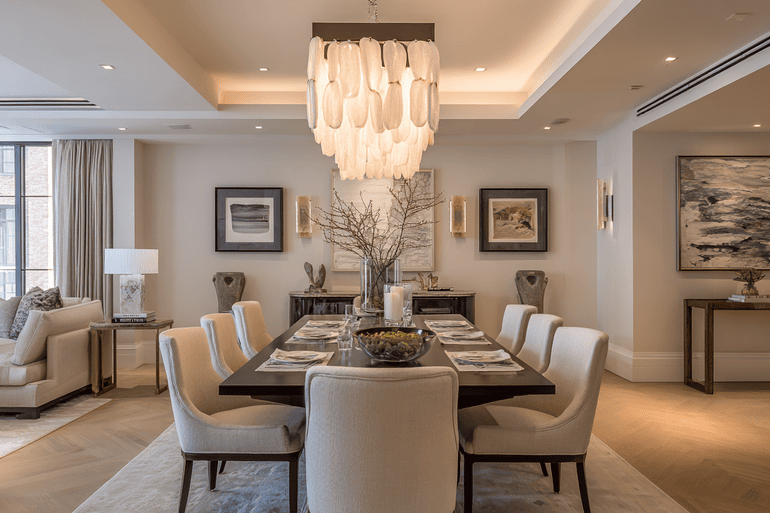
When you're planning a high-end renovation in New York City, the first real decision isn't about marble or millwork. It's about who leads the project and how.
Two models dominate the luxury residential market here:
- Full-service interior design: A designer manages the entire project vision, procurement, contractor relationships, and client experience from concept through completion.
- Design-build: A single firm handles both the design and the construction under one roof, combining those functions into a unified contract.
Both can produce beautiful results. But in NYC, they serve different clients, different projects, and different priorities. Understanding the difference helps you choose correctly before a single drawing is made.
What Full-Service Interior Design Actually Means
Full-service interior design means your designer takes responsibility for everything that touches your space. This goes far beyond choosing finishes or selecting furniture.
In a full-service model, your designer:
- Develops the complete design concept and visual direction
- Manages all vendor and contractor relationships
- Handles procurement, lead times, and delivery coordination
- Oversees installations and site visits
- Resolves issues before they reach the client
- Manages the project timeline and budget on your behalf
What most people don't realize is how much of this work happens out of sight. A high-end interior designer in NYC is managing ten moving parts simultaneously while the client sees only the curated result. That invisibility is the point. Your time and attention are protected from the complexity.
For most full-service residential projects in New York, this model is the standard precisely because the coordination demands are so high. Old buildings, landmark restrictions, co-op board approvals, and long lead times on custom pieces all require someone who does this daily and knows how to navigate it.
-1780667117770.webp)
What Design-Build Means in a Residential Context
Design-build is a delivery model where one company provides both architectural or interior design services and the construction work under a single contract.
The appeal is obvious:
- One point of contact for design and construction
- Potentially faster decision-making between designer and contractor
- Simplified billing and contract structure
Design-build firms in NYC typically offer a more streamlined process, particularly for projects where the construction scope is clearly defined upfront. A kitchen gut renovation, a bathroom remodel, or a specific structural reconfiguration can work well in this format.
Here's where this matters: design-build tends to work best when the project is construction-heavy and the design vision is relatively contained. When the project is design-heavy, highly customized, or involves significant procurement of furnishings, art, and decorative elements, the model starts to show its limits.
The Core Difference: Where Authority Lives
The most important distinction between these two models is not the scope of services. It is where creative and operational authority sits.
In full-service interior design, the designer is the primary advocate for the client's vision. The designer selects and manages contractors, meaning those contractors work in service of the design. The design leads.
In design-build, the contractor and designer are the same entity. This can create efficiency, but it can also mean that construction logic influences design decisions in ways that aren't always visible to the client.
This is where things usually go wrong for clients who choose design-build expecting a luxury interior design experience. The skill sets are genuinely different. A firm that excels at construction management may not have the same depth of sourcing relationships, custom fabrication access, or decorative expertise as a dedicated high-end interior designer in NYC.
Neither model is universally superior. But the distinction matters when you're trying to create a home that feels deeply personal, not just well-built.
-(1)-1780667177031.webp)
What High-Net-Worth Clients in NYC Typically Choose
In high-end residential work in New York City, full-service interior design is the predominant model among clients investing $500,000 or more in a project.
There are several reasons for this:
Complexity of the NYC residential market. Manhattan and the outer boroughs present unique challenges: co-op and condo boards, landmark preservation requirements, limited building access windows, freight elevator restrictions, and aging infrastructure. Managing these details requires expertise that lives specifically in the design and project management side of the business.
Custom and one-of-a-kind sourcing. At the high end, clients want pieces that don't exist in a catalog. Full-service interior designers in NYC maintain relationships with artisans, ateliers, antique dealers, and specialty manufacturers that most design-build firms simply don't have access to.
White-glove client experience. High-net-worth clients are not paying to manage a renovation. They are paying to arrive at a finished home. Full-service design firms are structured specifically to protect the client from the process. Decisions are presented clearly. Options are curated. Logistics are invisible.
Design as the primary value. When the finished space is the product, design leadership needs to be primary. In New York City, most high-end renovations are led by full-service interior design firms because of the level of coordination involved and because the design vision requires an advocate with full authority over the outcome.
When Design-Build Makes Sense
Design-build is not the wrong choice across the board. There are situations where it is genuinely the better fit.
Consider design-build when:
- The project is primarily structural or construction-focused, with limited decorative scope
- You want a faster process and are willing to accept a more standardized design approach
- The budget is more contained and a single contract simplifies management
- You are working on a secondary property or rental unit where design complexity is not the priority
For clients in this category, a well-run design-build firm in NYC can deliver strong results efficiently. The key is being honest about what the project actually requires.
-1780667209439.webp)
How to Evaluate Which Model Is Right for Your Project
The decision comes down to four questions:
How custom is the design vision? If you want something that looks and feels like no other apartment in the city, full-service interior design is the stronger choice.
How complex is the renovation? Large-scale gut renovations, landmarked buildings, and projects with significant millwork or custom fabrication benefit from designer-led project management.
How involved do you want to be? Full-service design is built for clients who want to make decisions, not manage a process. If you want to be closer to the construction side, design-build gives you that.
What is the primary deliverable? If you're optimizing for a beautiful, highly personal home, the design should lead. If you're optimizing for an efficient, well-executed renovation with a defined scope, design-build can serve that goal well.
One Industry Reality Worth Knowing
In New York City, the clients who invest most heavily in their homes almost always work with full-service interior designers. This isn't marketing. It reflects the structure of the market.
The projects that require the highest level of coordination, the most sophisticated sourcing, and the most precise execution are consistently led by designers who specialize in exactly that. The contractor relationship is managed by the designer, not the other way around.
For most high-end renovation projects in NYC, a full-service interior designer is the most practical and most protective choice for the client.
-1780667260973.webp)
Frequently Asked Questions
What is the difference between full-service interior design and design-build?
Full-service interior design is designer-led: the designer manages the entire project, including contractor relationships and procurement. Design-build is a model where one company handles both design and construction under a single contract.
Is design-build cheaper than hiring a full-service interior designer in NYC?
Not necessarily. Design-build can appear simpler, but high-end design-build firms in NYC operate at comparable price points to full-service designers. The cost difference depends on project scope, not the delivery model.
Do high-net-worth clients in NYC prefer full-service interior design?
Yes, in most cases. For projects that involve significant customization, complex logistics, or a high design standard, full-service interior design is the dominant model at the top of the New York market.
Can a full-service interior designer work alongside a design-build firm?
It is possible, but the arrangement requires clear agreements about authority and decision-making. In practice, most high-end projects work with one model or the other rather than combining them.
What does a full-service interior designer actually handle?
Everything from the initial design concept to final installation. This includes space planning, material and finish selection, furniture procurement, contractor oversight, vendor coordination, budget management, and project scheduling.
How long does a full-service interior design project take in NYC?
A full apartment renovation in New York City typically takes 12 to 24 months from design concept to completion, depending on scope, building restrictions, and custom lead times.
What is the minimum budget for full-service interior design in NYC?
Most full-service interior design firms in New York work with residential projects starting at $300,000 to $500,000 in total project budget, with many high-end engagements well above that range.
Who manages the contractors in a full-service design project?
The interior designer manages all contractor relationships. Clients are not coordinating directly with trades or managing site issues. That coordination happens behind the scenes.
Is design-build faster than full-service interior design?
For contained, construction-focused projects, design-build can be faster because the design and construction teams are integrated. For complex or highly customized projects, the timeline difference is less significant.
How do I choose between full-service interior design and design-build for my NYC renovation?
Start by asking what the project actually needs. If custom design, white-glove coordination, and a deeply personal result are the priority, full-service interior design in NYC is the appropriate choice. If the scope is primarily structural and you want simplified contracting, design-build is worth evaluating.
This article was written to help homeowners in New York City understand how high-end residential design projects are typically structured and delivered at the luxury level.