

The Full-Service Interior Design Process for NYC Homes
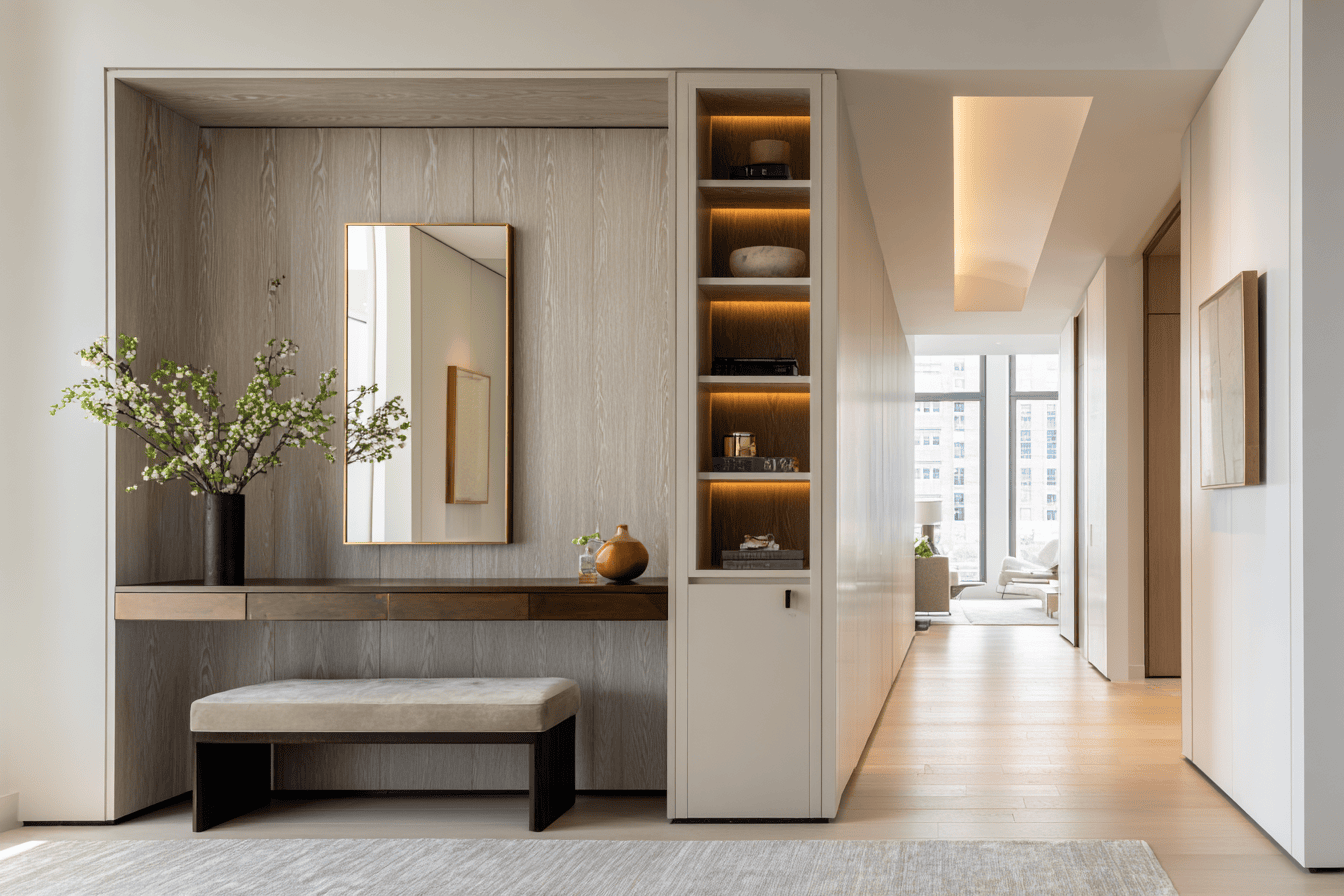
A full-service interior designer in New York City is responsible for planning, coordinating, and overseeing residential interior projects from concept through installation, within the regulatory, logistical, and building-specific constraints unique to NYC housing.
A high-end interior designer in NYC is responsible for:
- Comprehensive space planning aligned with existing layouts, structural conditions, and life-safety requirements
- Coordinating approvals with co-op boards, condominium associations, and building management
- Managing design documentation, schedules, and consultant collaboration
- Specifying finishes, fixtures, furnishings, and custom millwork
- Overseeing procurement, delivery logistics, and installation sequencing
- Ensuring work aligns with NYC construction rules, access limits, and building protocols
Designing a home in New York City is not just about aesthetics. Every apartment or townhouse sits within a web of rules, approvals, and physical constraints that shape what is possible and how long it takes. Co-op boards may require detailed design submissions, condominiums often enforce strict delivery and work-hour rules, and many renovations must comply with filing requirements overseen by the NYC Department of Buildings (DOB).
These constraints matter because they affect timing, cost, and risk. A missed filing, an unapproved material change, or a delivery scheduled outside allowed hours can delay a project by weeks. A full-service interior design process exists to anticipate these realities, coordinate around them, and protect the homeowner from unnecessary disruption.
Source: NYC Department of Buildings (DOB)
What “Full-Service” Interior Design Means in NYC
Full-service interior design in NYC refers to a comprehensive, end-to-end scope that covers both creative and operational responsibilities. It goes beyond selecting finishes or furniture and includes managing the many moving parts that affect how a home is actually built and furnished.
In New York, this matters because no two buildings operate the same way. A prewar co-op, a new condominium tower, and a single-family townhouse each come with different approval paths, access rules, and construction limitations. Full-service design accounts for those differences from the start.
Initial Consultation and Project Definition

The process begins with understanding how you live, what the home needs to support, and what constraints already exist. This includes reviewing floor plans, building rules, and any prior renovations that may affect the scope.
At this stage, a designer helps clarify priorities. In NYC homes, trade-offs are common, storage versus openness, plumbing locations versus layout changes, or budget versus custom work. Early clarity prevents costly revisions later.
Space Planning and Layout Development
Space planning is one of the most critical phases of the full-service process. NYC apartments often have fixed plumbing stacks, structural walls, or landmark restrictions that limit changes.
A full-service designer evaluates what can move, what cannot, and how to optimize flow within those boundaries. The result is a layout that feels intentional and functional, even when square footage is limited.

Design Development and Material Selection
Once the layout is established, the designer develops the visual direction. This includes finishes, fixtures, lighting, cabinetry, and furniture that align with both your preferences and the realities of the building.
In NYC, material selection is also practical. Some buildings restrict certain flooring types, wall assemblies, or mechanical changes. A full-service designer selects materials that meet these requirements while still achieving the desired look.
Coordination With Architects, Engineers, and Contractors
Most NYC renovations involve multiple professionals. Architects may be required for DOB filings, engineers for structural or mechanical changes, and contractors for execution.
A full-service interior designer acts as a central point of coordination. This reduces miscommunication and ensures that design intent is carried through technical drawings, pricing, and construction.
Source: NYC Department of Buildings (DOB)

Board Submissions and Building Approvals
Co-op and condo approvals are a defining feature of NYC projects. Boards often require detailed drawing sets, finish schedules, and written scopes before work can begin.
A full-service designer prepares and coordinates these submissions, responding to questions and revisions as needed. This step is less visible but essential, as approval delays are one of the most common causes of stalled projects.
Budget Planning and Cost Management
Budgeting in NYC requires precision. Labor rates, material lead times, and access limitations all influence cost.
A full-service process includes ongoing cost checks as design decisions are made. This helps ensure that selections align with the overall budget and reduces the likelihood of surprises once construction begins.

Procurement and Vendor Management
Furniture, lighting, and custom millwork often have long lead times. In NYC, deliveries must also align with building schedules, elevator reservations, and insurance requirements.
A full-service designer manages ordering, tracking, storage, and delivery coordination. This protects the homeowner from managing dozens of vendors and ensures items arrive in the correct sequence.
Installation and Final Styling
Installation in NYC is highly coordinated. Freight elevators may be available only during certain hours, and some buildings limit the number of workers on-site at one time.
A full-service designer oversees installation to confirm that items are placed correctly, issues are addressed promptly, and the home is fully resolved before move-in. This phase turns plans into a finished, livable space.

Why NYC Homes Benefit From a Full-Service Approach
NYC homes operate within tighter margins for error. Space is limited, rules are strict, and access is controlled.
A full-service interior design process exists to manage these realities thoughtfully. It reduces risk, protects your time, and allows decisions to be made with a clear understanding of consequences.
Frequently Asked Questions
Do I need a full-service interior designer for a small NYC apartment?
Even small apartments face the same building rules and approval processes as larger homes. Full-service design helps avoid missteps that can cause delays or added costs.
How does a full-service designer interact with my contractor?
The designer coordinates design intent, documentation, and sequencing, while the contractor executes the work under a separate agreement.
Are DOB filings always required for interior projects?
Not always. Filings depend on the scope of work, such as plumbing, electrical, or structural changes.
How long does the full-service design process take in NYC?
Timelines vary based on scope, approvals, and lead times. Design and approvals often take several months before construction begins.
Can a full-service designer help with board approvals?
Yes. Preparing and coordinating board submissions is a core part of the process.
What is the difference between full-service and design-only services?
Design-only typically ends with drawings or selections. Full-service includes coordination, procurement, and installation oversight.
Do full-service designers manage furniture purchasing?
Yes. Procurement, tracking, and delivery coordination are central responsibilities.
Is full-service design more expensive?
It often represents a larger upfront investment but can reduce costly errors, delays, and rework over time.