

Designing a Second Home in Manhattan: Where Convenience Matters More Than Square Footage
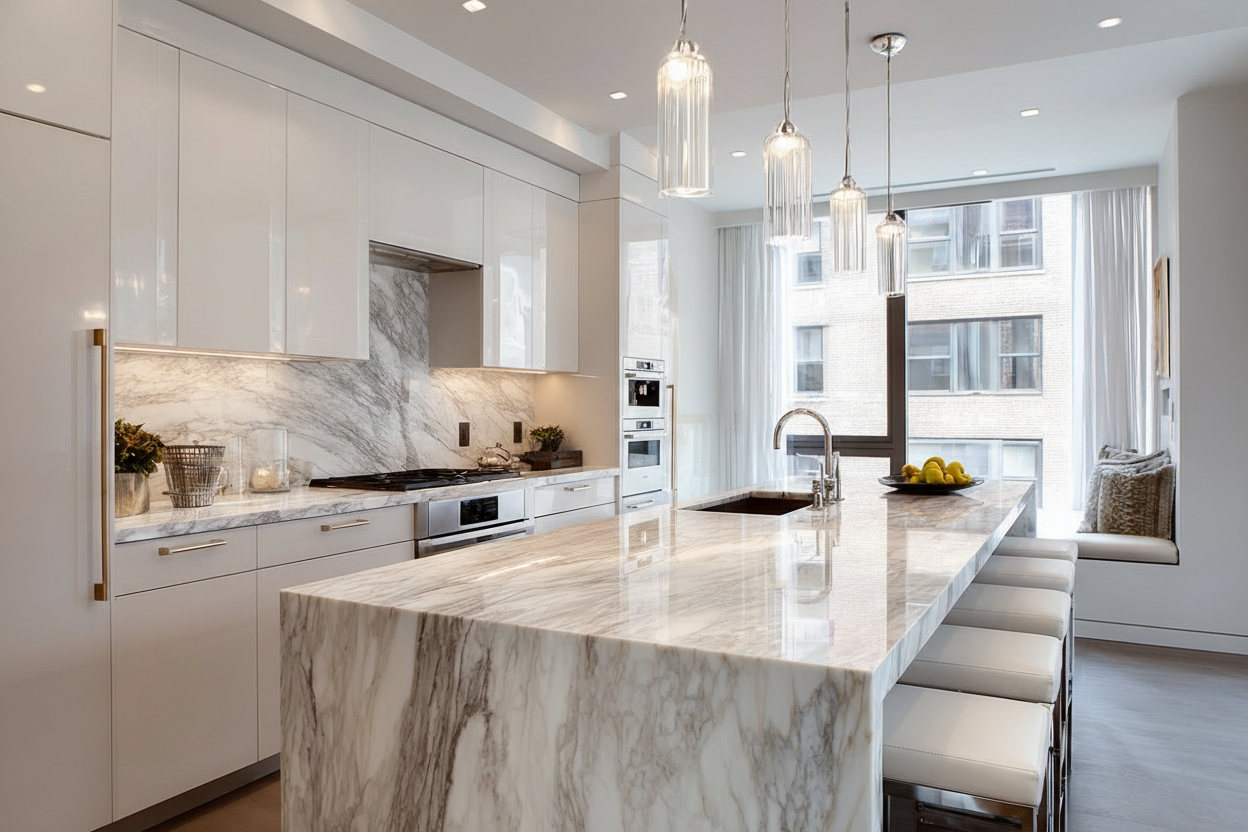
A Manhattan second home is a residence designed around ease of use rather than size, so it can be opened, enjoyed, and left behind with almost no effort from the owner.
The best second homes in the city usually share a few qualities:
- They are ready to live in the moment you walk through the door
- They store what you need so you can travel light
- They are scaled to how you actually spend your time in the city
- They hold up well when no one is home for weeks at a time
- They run on building services and systems that work while you're away
In New York City, this matters more than almost anywhere else. Space is expensive, buildings have strict rules, and most second-home owners spend their visits on dinners, meetings, theater, and family rather than on the apartment itself. A smaller home that works perfectly will almost always serve you better than a larger one that needs attention.
What Makes a Second Home Different From a Primary Residence
A second home is used in short, intense stretches, so it needs to be designed for arrival and departure rather than for daily routine.
In your primary home, you build habits over years. You know where things go, and you notice when something breaks. A second home doesn't get that kind of daily attention. You might be there for four days, gone for three weeks, then back for a long weekend with your kids.
That rhythm changes almost every design decision. Storage, finishes, lighting, the kitchen layout, even the way the closets are organized all need to support a life that starts and stops.
What most people don't realize is that a second home often needs more thought per square foot than a primary residence. There's less room for error, and fewer chances to fix things casually.

Why Convenience Matters More Than Square Footage in Manhattan
In Manhattan, convenience is the real luxury in a second home, because the city itself is where you'll spend most of your time.
Very few people buy a pied-à-terre to stay inside it all day. They buy it to walk to a favorite restaurant, be ten minutes from the office, or put up family close to the grandchildren. The apartment is a base, and the best base is one that asks nothing of you.
Location and Building Services Do the Heavy Lifting
A well-located apartment in a full-service building often delivers more day-to-day comfort than extra square footage ever could.
A doorman who accepts deliveries, a resident manager who can let in a technician, and a package room that holds your groceries until you arrive all reduce the work of owning a home you don't live in full time. These services are part of the design, even though they aren't drawn on a floor plan.
Here's where this matters. If a building can't support you while you're away, the interior has to compensate, and that usually means more systems, more vendors, and more things to manage.
Every Square Foot Has to Earn Its Place
In a smaller Manhattan apartment, each room should have a clear job, and unused space is a cost rather than a benefit.
A formal dining room that gets used twice a year is hard to justify at Manhattan prices per square foot. A second bedroom that works as a guest room, a study, and a place for luggage and seasonal storage is far more valuable.
Good second-home design starts by asking a simple question: what will you actually do here? The answer shapes the plan.
How Second-Home Owners Actually Use Their Manhattan Apartments
Most second-home owners in Manhattan use their apartments for sleep, getting ready, light meals, and occasional small gatherings.
That pattern shows up again and again across projects. The typical visit looks something like this:
- Arriving after a flight or a drive, often in the evening
- Changing quickly and heading out for dinner
- Working from the apartment for a few hours in the morning
- Hosting a small drink or a family breakfast
- Packing up and leaving with very little time to tidy
In NYC projects, this comes up often. Clients picture a grand entertaining space, then realize they spend most of their time in the bedroom, the bath, and a corner of the living room with a laptop. Designing around the real pattern, not the imagined one, is what makes a second home feel effortless.

Design Priorities for a Manhattan Second Home
The most important design priorities for a Manhattan second home are readiness, storage, durability, and remote control of the space.
Arrival-Ready From the First Minute
A second home should feel finished and comfortable the moment you open the door, with nothing to unpack, set up, or switch on.
That usually means the beds are made with your own linens, toiletries are stocked, the refrigerator has the basics, and the lighting comes on to a warm, preset scene. Many owners arrange for the apartment to be prepared before every visit so they never walk into a cold or stale room.
A good test: could you arrive at 11 p.m. after a long day and be in bed within fifteen minutes? If the answer is yes, the design is working.
Storage That Lets You Travel Light
The single biggest convenience in a second home is a wardrobe and supply system that means you rarely need to pack.
When clothing, shoes, toiletries, chargers, and even a few books live permanently in the apartment, every trip gets easier. Owners who used to arrive with two suitcases often end up traveling with a carry-on or nothing at all.
Useful storage elements include:
- A closet fitted for a full city wardrobe, organized by season
- A dedicated drawer for chargers, adapters, and tech accessories
- A locked owner's closet for personal items when guests use the apartment
- Built-ins that hide luggage, extra bedding, and household supplies
This is where things usually go wrong. People assume a smaller home needs fewer storage solutions, when in reality it needs smarter and more intentional ones.
Kitchens Scaled to How You Actually Eat
A second-home kitchen in Manhattan should be built for coffee, breakfast, and light entertaining rather than for daily cooking.
Most owners eat out often when they're in the city. A beautifully finished compact kitchen with a strong coffee setup, a quality refrigerator, a wine column, and enough prep space for a simple meal often makes more sense than a full chef's kitchen. The space saved can go toward a better bedroom suite or a proper home office.
That said, families who host holidays in the city may need more. The point isn't to shrink the kitchen by default. It's to size it honestly.
Bedrooms and Guest Flexibility
In a Manhattan second home, the primary suite deserves the most investment, and secondary rooms should be flexible.
The bedroom is where you'll spend the most hours, so sleep quality comes first. That means good blackout treatments, sound control for street noise, a comfortable reading chair, and a bath that feels like a hotel you'd happily return to.
Secondary rooms work hardest when they can shift roles. A study with a well-designed sleeper, a room with a Murphy bed behind millwork, or a den with pocket doors can handle visiting children, guests, or work without sitting empty most of the year.
Finishes That Hold Up to Being Left Alone
Materials in a second home should be chosen for how they perform during long periods without anyone checking on them.
Some finishes need regular care or react poorly to changes in humidity and temperature. In a home that sits empty for weeks, that becomes a risk. Durable, low-maintenance choices protect your investment without forcing you to give up a refined look.
Smart choices often include:
- Sealed natural stone or high-quality porcelain in wet areas
- Performance fabrics on upholstery that may get used by guests
- Engineered wood flooring that handles humidity shifts well in pre-war buildings
- Hardware and fixtures from manufacturers with reliable local service
Technology That Works When You're Not There
The right home technology lets you monitor and adjust a Manhattan second home from anywhere, which is one of the biggest sources of peace of mind for owners.
Remote climate control, leak sensors under sinks and appliances, smart locks with temporary codes for housekeepers, and a simple lighting system all make the home easier to own. The key word is simple. A system that needs a specialist to reset after a power outage creates more problems than it solves.

Co-ops, Condos, and Building Rules That Shape a Second Home
Building type has a major effect on how a second home can be used and renovated in Manhattan, and it should be considered before design decisions are made.
| Factor | Co-op | Condo |
|---|---|---|
| Pied-à-terre use | Often restricted or reviewed by the board | Usually more flexible |
| Guest stays without owner present | Frequently limited | Often allowed, subject to bylaws |
| Renovation approvals | Board and managing agent review, alteration agreement | Board review, usually less involved |
| Work hours | Strict weekday windows, some summer-only rules | Typically weekday windows |
| Timeline impact | Can add weeks or months | Usually shorter |
Here's where this matters for design. If your building limits when guests can stay without you, a fully kitted guest suite may not get much use. If the alteration agreement restricts wet areas over living spaces below, moving a bathroom might not be possible at all. These constraints should shape the plan from day one.
Managing a Renovation When You Don't Live in New York
Renovating a second home from another city or country is difficult to manage alone, because NYC projects involve boards, filings, licensed trades, and building staff who all expect a local point of contact.
In New York City, most high-end renovations are led by full-service interior design firms because of the level of coordination involved. Between alteration agreements, Department of Buildings filings when they apply, insurance certificates, freight elevator schedules, and building work hours, there are dozens of moving parts before a single wall comes down.
For owners who aren't in the city, the right setup looks quiet from the outside. Decisions are made in a few focused meetings or video calls. Samples are sent or reviewed in person during scheduled visits. Everything else, from contractor schedules to delivery windows to punch lists, runs behind the scenes. Clients see progress updates and make choices, but they don't spend their weeks chasing vendors or fielding calls from the managing agent.
The final step is often the one owners appreciate most. With full-service interior design in NYC, the apartment can be delivered fully furnished, styled, and stocked, so the first visit after the renovation feels like checking into a home that already knows you.

Square Footage vs. Convenience: How to Decide
If you're choosing between a larger apartment with fewer services and a smaller one with better location and building support, convenience usually wins for a second home.
| Consideration | Larger apartment, fewer services | Smaller apartment, strong services |
|---|---|---|
| Ease of arrival | More setup and upkeep | Ready with minimal effort |
| Maintenance while away | Owner arranges more vendors | Building staff help |
| Daily use | Extra rooms often unused | Every room has a role |
| Carrying costs | Higher per year | Lower or better aligned with use |
| Resale appeal | Strong for full-time buyers | Strong for pied-à-terre buyers |
There are exceptions. A family that spends several months a year in the city, or hosts adult children regularly, may genuinely need more space. But for most second-home owners, a well-located, well-designed smaller apartment delivers a better experience per visit.
Common Mistakes in Manhattan Second-Home Design
The most common mistake in Manhattan second-home design is planning for an imagined lifestyle instead of the one you'll actually live.
Other frequent missteps include:
- Treating the space like a smaller copy of the primary home
- Underinvesting in storage and overinvesting in formal rooms
- Choosing delicate finishes that struggle in an often-empty home
- Installing complex technology that no one locally knows how to service
- Ignoring building rules until after the design is finished
- Leaving the final furnishing and stocking to "figure out later"
Each one creates friction, and friction is exactly what a second home is supposed to remove.

Is a Full-Service Interior Designer the Right Choice for a Second Home?
For most second-home projects in Manhattan, a full-service interior designer is the most practical choice, especially when the owner lives outside the city.
A second home has to be designed, built, furnished, and maintained by someone who is physically present when you're not. A high-end interior designer NYC owners hire for this kind of work brings the contractor relationships, trade sourcing, and building experience that keep the project moving without daily input from the client.
In high-end residential work, turnkey delivery of a second home tends to produce the strongest results. Owners get a finished apartment rather than a construction site with furniture arriving in waves. When comparing options, look for a high-end interior designer NYC co-op and condo boards have worked with before, since familiarity with a building's process can save real time.
Full-service interior design in NYC is built for exactly this situation: a client who wants a beautiful, highly functional home without becoming its project manager.
Frequently Asked Questions
What is a pied-à-terre?
A pied-à-terre is a small secondary residence in a city, used part of the time rather than as a primary home. In Manhattan, the term usually refers to an apartment owned by someone whose main residence is elsewhere.
How big should a second home in Manhattan be?
A Manhattan second home should be as large as your real usage requires and no larger. For many owners, a one or two bedroom apartment in a well-located, full-service building is enough.
Should I buy a co-op or a condo for a second home in NYC?
Condos are usually the easier choice for a second home in NYC because they tend to allow more flexibility for part-time use and guest stays. Many co-ops restrict pied-à-terre ownership or review it closely during board approval.
What are the most important design features in a Manhattan second home?
The most important features are generous, well-organized storage, a comfortable primary suite, durable finishes, and simple remote-controlled systems. Together they make the apartment easy to arrive at and easy to leave.
Can I renovate a Manhattan apartment if I don't live in New York?
Yes, many owners renovate Manhattan apartments from another city or country. It works best with a full-service design firm that manages the board, contractors, and building staff on your behalf.
How long does a second-home renovation in Manhattan take?
A full renovation of a Manhattan apartment often takes 8 to 18 months from design through completion, depending on scope and building approvals. Co-op board reviews and restricted work hours can extend the timeline.
Should a second-home kitchen be smaller?
A second-home kitchen should match how you actually eat in the city. Owners who mostly dine out can often use a refined compact kitchen and put the saved space toward the bedroom suite or a home office.
What does turnkey mean for a second home?
Turnkey means the apartment is delivered fully finished, furnished, styled, and stocked, so the owner can move in without doing any setup. It's one of the most requested services for Manhattan second homes.
How do I keep a second home maintained while I'm away?
The simplest approach is a combination of building services, remote monitoring technology like leak sensors and climate control, and a trusted housekeeping or home management arrangement. Durable finishes also reduce how much upkeep the home needs.