

What Does It Cost to Professionally Furnish an Entire Apartment in NYC?
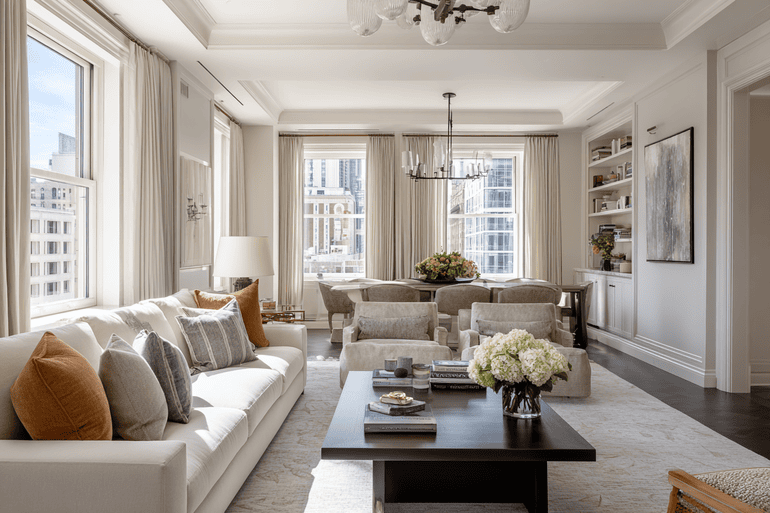
Professionally furnishing an entire apartment in New York City typically costs between $100,000 and $500,000 for a high-end two-bedroom, with larger homes and penthouses often exceeding $1 million once custom pieces, window treatments, lighting, and design fees are included.
The final number depends on a few key variables:
- Size of the apartment and the number of rooms being furnished
- Quality tier, from well-made retail to trade-only and fully custom pieces
- Design fee structure, which varies widely between firms
- Logistics costs specific to NYC, including freight, receiving, delivery, and building requirements
- Scope, meaning whether art, accessories, linens, and styling are included
In New York, furnishing costs run higher than in most U.S. cities. The difference goes beyond pricier products. Manhattan buildings add layers of cost and coordination that don't exist in a suburban home: certificates of insurance for every delivery, freight elevator reservations, limited delivery windows, and oversized pieces that sometimes need to be hoisted through a window.

What Kind of Budget Should You Expect by Apartment Size?
For a high-end furnishing project in Manhattan, most homeowners should plan for roughly $250 to $350 per square foot, not including design fees or art.
That figure is a working estimate, not a quote. But it gives you a realistic starting point, and it tends to hold up across most high-end NYC projects we see.
Here's how budgets typically break down by size and tier. These ranges cover furniture, lighting, rugs, window treatments, and accessories.
| Apartment Size | Well-Furnished | High-End (Trade + Custom) | Ultra-Luxury (Bespoke + Collectible) |
|---|---|---|---|
| One-bedroom (700–1,000 sq ft) | 60K–120K | 150K–300K | $400K+ |
| Two-bedroom (1,100–1,600 sq ft) | 100K–200K | 250K–500K | $600K+ |
| Three-bedroom (1,800–2,800 sq ft) | 175K–350K | 400K–800K | $1M+ |
| Penthouse / 4+ bedrooms (3,000+ sq ft) | 300K–600K | 750K–1.5M | $2M+ |
What the Tiers Actually Mean
The tier you choose shapes your budget more than square footage does.
- Well-furnished: High-quality retail and entry-level trade brands. Good construction, limited customization, shorter lead times.
- High-end: Trade-only sourcing, custom upholstery, custom drapery, and select made-to-order pieces. This is where most luxury Manhattan apartments land.
- Ultra-luxury: Bespoke furniture built for the space, collectible and vintage design pieces, artisan lighting, and hand-knotted custom rugs.
What most people don't realize is that the jump between tiers comes mainly from customization and fit, and less from the logo. A custom sofa sized precisely for a pre-war living room will cost more than a showroom piece, but it will also look like it belongs there.

How Much Does Each Room Cost to Furnish?
The living room is almost always the most expensive room to furnish, typically accounting for 25 to 35 percent of the total furnishing budget.
It holds the most pieces, gets the most attention, and usually carries the largest rug and the most layered lighting. Here's a typical breakdown for a high-end Manhattan apartment:
- Living room: $75,000 to $200,000
- Dining room: $40,000 to $120,000
- Primary bedroom: $50,000 to $125,000
- Secondary bedrooms: $30,000 to $70,000 each
- Home office or library: $25,000 to $80,000
- Entry and hallways: $10,000 to $40,000
- Window treatments (whole apartment): $30,000 to $100,000+
Window treatments deserve their own mention. In NYC apartments with tall pre-war windows or floor-to-ceiling glass in new developments, custom drapery and motorized shades can easily become one of the largest single line items. Clients are often surprised by this, so it's worth planning for early.
What Are the Hidden Costs of Furnishing an NYC Apartment?
The costs most homeowners underestimate are the ones that happen after a piece is purchased: freight, receiving, storage, delivery, and installation.
These can add 15 to 25 percent to the product cost. Here's where the money goes:
- Sales tax: New York City's combined rate is 8.875 percent, which adds up quickly on a six-figure order.
- Freight and crating: Custom and imported pieces often ship crated, which costs more and takes longer.
- Receiving and warehousing: Pieces arrive over months, so a receiving warehouse inspects and holds everything until installation.
- White-glove delivery: Includes unpacking, assembly, placement, and debris removal.
- Building requirements: Certificates of insurance, freight elevator bookings, and restricted delivery hours set by co-op and condo management.
- Hoisting and rigging: When a sofa or piano won't fit through the stairwell or elevator, it goes through a window. That alone can cost $3,000 to $15,000 or more.
This is where things usually go wrong for homeowners who furnish on their own. A single piece gets damaged in transit, the building rejects a delivery because the insurance certificate was missing, or a custom sofa arrives and doesn't fit the elevator. Each one costs time and money to fix.

How Do Interior Designers Charge for Furnishing Projects?
Most high-end interior designers in NYC charge through a combination of a design fee and a markup on furnishings, though the exact structure varies by firm.
Understanding the fee model matters because two proposals with similar totals can be structured very differently. The most common approaches:
- Flat design fee: A fixed fee for the design work, often paired with a procurement markup.
- Hourly billing: Typically $250 to $600 per hour in Manhattan, depending on the seniority of the designer.
- Percentage of project cost: Usually 15 to 35 percent of the total furnishing budget.
- Markup on trade pricing: Designers purchase at trade (net) prices and bill clients at a markup, often 20 to 35 percent over net.
Does Hiring a Designer Actually Cost More?
Hiring a designer doesn't always increase the total cost as much as people expect, because trade pricing and fewer costly mistakes offset part of the fee.
Designers buy at trade prices that are often 20 to 40 percent below retail. Even after the markup, clients frequently pay close to or below what they'd pay walking into a showroom. And they avoid the expensive errors: the rug that's a foot too small, the chairs that don't work with the table height, the sofa that has to be reupholstered because the fabric faded in western light.
Here's where this matters. On a $400,000 furnishing budget, one or two avoided mistakes can cover a meaningful share of the design fee.
Why Is Furnishing in NYC More Expensive Than Elsewhere?
Furnishing an apartment in New York City costs more than in most markets because of building logistics, space constraints, and the need for custom-fit pieces.
Manhattan apartments rarely have standard proportions. Pre-war homes have irregular walls, radiators under windows, and deep window wells. New developments have floor-to-ceiling glass and open plans that need careful zoning. Off-the-shelf furniture often doesn't fit well in either.
Then there's the building itself. In NYC projects, this comes up often: co-op and condo boards control when deliveries happen, how long the freight elevator is available, and what insurance vendors must carry. Every delivery becomes a small coordination project.
In New York City, most high-end furnishing and renovation projects are led by full-service interior design firms because of the level of coordination involved. Between vendors, workrooms, freight companies, receivers, installers, and building management, a single apartment can involve dozens of parties.

How Long Does It Take to Furnish an Apartment in NYC?
A professionally furnished NYC apartment typically takes six to twelve months from first design meeting to final installation.
Most of that time is lead time, not design time. Custom upholstery often takes 12 to 20 weeks. Imported pieces and artisan lighting can take longer. Custom rugs can run four to six months.
A typical timeline looks like this:
- Design development: 6 to 10 weeks
- Proposals, approvals, and ordering: 2 to 6 weeks
- Production and shipping: 12 to 24 weeks
- Receiving and inspection: ongoing as pieces arrive
- Installation: usually 1 to 3 days, done all at once
That final step is worth highlighting. In a full-service model, pieces are held at the warehouse until everything is ready, then installed in a single coordinated day or two. The client leaves in the morning and comes home to a finished apartment, with beds made, art hung, and books on the shelves. They never see the boxes, the delivery schedules, or the building paperwork.
Is Full-Service Design Worth It for Furnishing an Entire Apartment?
For most homeowners furnishing an entire apartment in Manhattan, full-service interior design in NYC is the most practical choice, especially at the high-end tier.
The reason is scale. Furnishing one room is manageable on your own. Furnishing eight rooms, with 150 or more individual items, custom pieces from multiple workrooms, and a building with strict delivery rules, is a different kind of project.
Here's how the main approaches compare:
| Approach | Best For | What You Manage |
|---|---|---|
| DIY furnishing | Smaller budgets, one or two rooms | Everything: sourcing, orders, delivery, returns |
| E-design or consultation | Homeowners who want a plan but will execute themselves | Purchasing, logistics, installation |
| Full-service interior design | Whole-apartment and high-end projects | Approvals and decisions only |
With a full-service firm, the client's role is to make decisions. Tracking orders, chasing vendors, inspecting damaged freight, and coordinating with the building all happen behind the scenes.
In high-end residential work, this approach tends to produce the strongest results, largely because one team controls the whole picture. Every piece is chosen with the others in mind, and nothing arrives without a plan for where it goes.
When a Full-Service Firm May Not Be Necessary
A full-service firm isn't the right fit for every project. If you're furnishing a single room, refreshing existing pieces, or working with a modest budget, a consultation or e-design service may be enough.
The value of working with a high-end interior designer in NYC grows with the size and complexity of the project. For a full apartment at the high-end tier, that value is usually clear.

How to Set a Realistic Furnishing Budget
The simplest way to set a realistic budget is to start with square footage, choose your quality tier, and then add 20 to 30 percent for design fees, logistics, and tax.
A quick framework:
- Multiply square footage by your tier's per-foot range. High-end typically runs $250 to $350 per square foot.
- Add logistics and tax. Plan for 15 to 25 percent on top of product costs.
- Account for design fees. Ask each firm to explain its full fee structure in writing.
- Decide on art separately. Art budgets vary too much to fold into a furnishing estimate.
- Build in a contingency. Ten percent is a sensible cushion for custom work.
Be honest with your designer about the number. A good high-end interior designer in NYC will tell you what's achievable at your budget and where it makes sense to invest versus hold back. Usually that means spending on the pieces you touch every day and the rooms where you spend the most time.
Frequently Asked Questions
How much does it cost to furnish a one-bedroom apartment in NYC?
A high-end one-bedroom apartment in NYC typically costs $150,000 to $300,000 to furnish professionally. A well-furnished approach using quality retail and entry-level trade pieces can run $60,000 to $120,000.
How much does it cost to furnish a two-bedroom apartment in Manhattan?
Professionally furnishing a two-bedroom Manhattan apartment at the high-end tier usually costs $250,000 to $500,000, not including art or design fees.
What is the average cost per square foot to furnish a luxury NYC apartment?
Most high-end NYC furnishing projects fall between $250 and $350 per square foot. Ultra-luxury projects with bespoke and collectible pieces often exceed $400 per square foot.
Do furnishing budgets include interior design fees?
Usually not. Design fees are typically quoted separately, either as a flat fee, an hourly rate, a percentage of the project, or a markup on trade pricing.
How much do interior designers charge in NYC?
High-end interior designers in NYC generally charge $250 to $600 per hour, 15 to 35 percent of project costs, or a markup of 20 to 35 percent on trade-priced furnishings, depending on the firm.
What hidden costs should I expect when furnishing an apartment in NYC?
Common hidden costs include 8.875 percent sales tax, freight and crating, warehouse receiving and storage, white-glove delivery, building insurance requirements, and hoisting for oversized pieces. Together these often add 15 to 25 percent to product costs.
How long does it take to fully furnish an apartment in NYC?
Most professionally furnished NYC apartments take six to twelve months, with custom furniture lead times of 12 to 20 weeks accounting for most of that time.
Is it cheaper to furnish an apartment without a designer?
Not always. Designers access trade pricing that is often 20 to 40 percent below retail, and they help avoid costly sizing and selection mistakes, which can offset much of the design fee.
What is the most expensive room to furnish?
The living room is usually the most expensive, typically accounting for 25 to 35 percent of the total furnishing budget because it holds the most pieces, the largest rug, and layered lighting.
Should I hire a full-service interior designer to furnish my entire apartment?
For whole-apartment projects at the high-end tier in Manhattan, full-service interior design in NYC is typically the most practical choice, because it handles sourcing, procurement, logistics, building coordination, and installation on the client's behalf.